Playback starts YouTube’s embedded player (privacy-enhanced mode).
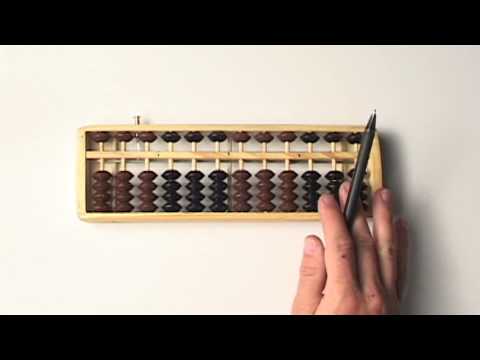
Abacus Lesson 1 // Introduction, Proper Technique, & History of the Abacus // Tutorial
ChannelThe HEV ProjectDescription from the creator
*PLEASE READ THE DESCRIPTION BELOW FOR A LESSON MAP.*
**Download the FREE worksheet that goes with each lesson.**
thehevproject.blogspot.com/p/free-worksheets.ht…
The abacus uses complementary numbers for calculation. In order to become familiar with the process, the lessons are broken down into the following 7 sections:
1- Lessons 1-2. Introduction to the Abacus.
2- Lessons 3-8. Simple Addition. This is REALLY simple math and does not involve the use of complementary numbers. MOST OLDER STUDENTS WILL BE ABLE TO SKIP THESE LESSONS once they are comfortable with moving the beads.
3- Lessons 9-11. Addition using Complementary numbers with respect to 5.
4- Lessons 12-17. Simple Subtraction. This is REALLY simple math and does not involve the use of complementary numbers. MOST OLDER STUDENTS WILL BE ABLE TO SKIP THESE LESSONS once they are comfortable with moving the beads.
5- Lessons 18-20. Subtraction using Complementary numbers with respect to 5.
6- Lessons 21-27. Addition and Subtraction using Complementary numbers with respect to 10.
7- Lessons 28-33. Addition and Subtractions using COMPOUND Complementary numbers with respect to 10. This is where you really start using the abacus. These lessons are the most challenging for students at any age. (a lot of people give up here)
Make sure you have a solid understanding of complementary numbers with respect to 5 and 10 before attempting these lessons.
-------------------------
The abacus is emerging as a re-discovered treasure in teaching children basic math. It is the original calculator and is still used in many parts of the world.
Some ways that children benefit by learning the abacus are:
-Visual representation of the number system.
-Properly lining up numbers for addition.
-Number placement and values (including decimals)
-Whole brain development. Promotes the right brain development of visualization and the left brain development of logic and calculation.
-Improved mental calculations
The abacus is fun and clicks instantly with children of any age.
Each lesson involves a short 7-10 min instructional video that teaches the fundamental principles behind the subject being taught with printable activities sheets to help with learning the abacus.
You will need an abacus to do this course. Here is a link to where we purchased the abacus used in the video. (You can use any abacus so long as it has the same parts as the one shown in the video)
The place I originally got the abaci from no longer sells them, but here is a place that sells a similar one. Please report if this link is no longer valid so I can up date this :)
suntekstore.com/goods.php?id=14003722&utm_s…
Ages: All ages. As soon as a child learns to count on their fingers they are ready to start using the abacus. However, ages 8 and up will benefit the most. Older kids will already be comfortable with basic math skills and will feel that these videos move a bit slow, but can still benefit significantly by learning the abacus.
Lessons should be done in order as each lesson builds upon principles from the previous lesson.
About this tutorial
The HEV Project published this 8:31 video tutorial on October 25, 2013. It has been watched 2,168,085 times on YouTube.
- Channel
- The HEV Project
- Category
- Education
- Duration
- 8:31
- Published
- October 25, 2013
- Views
- 2,168,085
- Likes
- 11,496
Tags
Share
Further reading
-
Abacus Anatomy & Construction | Introduction to Abacus
cuemath.com
Abacus Apps on touch-screen tablets are better simulations. With a real abacus, constant practice is indispensable in achieving virtuosity in calculating speed. Finger Technique: A Japanese textbook published in 1954 sh…
-
The Abacus: A Brief Introduction - Ryerson University
ee.ryerson.ca
Similarly, the fourth column representing the number 7, is counted with 1 bead from the top-deck (value 5) and 2 beads from the bottom-deck (each with a value of 1, totaling 2); the sum of the column (5+2) is 7. Techniq…
-
Abacus Lesson 1 // Introduction, Proper Technique, & History ...
pinterest.com
Abacus Lesson 1 // Introduction, Proper Technique, & History of the Abacus // Tutorial Short easy lessons paced for younger viewers that teach addition and subtraction on a traditional abacus or soroban.
This tutorial in other languages
- FRAbacus Leçon 1 // Introduction bonne technique, et histoire de l'Abacus // Tutorial
- ESAbacus Lección 1 // Introducción, la técnica adecuada, e Historia de la // Tutorial Abacus
- PTAbacus Lição 1 // Introdução, técnica adequada, e História da Abacus // Tutorial
- ITAbacus Lezione 1 // Introduzione, la tecnica corretta, e Storia della Abacus // Tutorial
- DEAbacus Lektion 1 // Einführung, die richtige Technik, und Geschichte des Abacus // Tutorial
- NLAbacus Les 1 // Introductie, de juiste techniek, en Geschiedenis van de Abacus // Tutorial
- RUAbacus Урок 1 // Введение, правильная техника, и история Abacus // Учебник
- PLAbacus Lekcja 1 // Wprowadzenie Właściwa technika i Historia Abacus // Tutorial
- JAそろばん教室そろばん//チュートリアルの1 //はじめに、適切な技術、&歴史
- ARالمعداد الدرس 1 // مقدمة، الأسلوب السليم، وتاريخ العداد // دروس
- HIअबैकस पाठ 1 // परिचय, उचित तकनीक, और अबैकस // ट्यूटोरियल का इतिहास
- IDAbacus Pelajaran 1 // Pendahuluan, Proper Teknik, & Sejarah Abacus // Tutorial