Playback starts YouTube’s embedded player (privacy-enhanced mode).
How to Attack in Chess?
ChannelRemote Chess AcademyDescription from the creator
♟️ Study the complete course "Boleslavsky Pawn Structures" - bit.ly/boleslavsky
📥 Download the PGN of this game from this blog-post - bit.ly/304A2SD
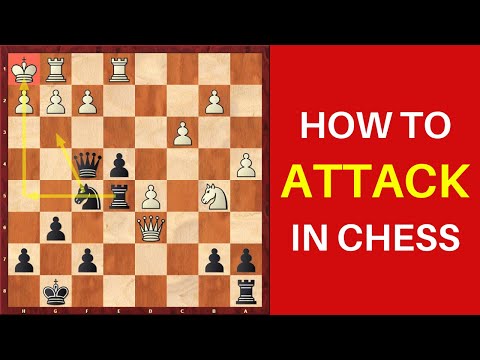
In this video lesson, GM Igor Smirnov analyzes a game played between Leonid Yudasin and the former world chess champion Vladimir Kramnik. In this game, Kramnik shows really well how to develop a crushing attack against your opponent's king with a beautiful combination.
Kramnik played the Sveshnikov variation from the Sicilian Defene, and after the opening stage he had a centralized pawn on e5, with no counterpart. Kramnik realized that was his strength and he developed a strong kingside attack by anchoring that pawn.
While Kramnik developed his attack by bringing in all his pieces into the attack, his pawn, after being pushed to e4, restricted his opponent's pieces on the queenside from entering into the center or the kingside for defense. Watch the complete video analysis as GM Igor Smirnov summarizes the powerful attacking principle of simultaneously improving pieces and attacking the opponent.
♟️ Study the complete course "Boleslavsky Pawn Structures" - bit.ly/boleslavsky
♕ How to succeed in chess? (FREE e-book): bit.ly/2Zlp0FI
♕ How to analyze your games (FREE course): bit.ly/2Djz1tB
♕ 7 Best Chess Opening Traps (FREE course): goo.gl/GCCK4d
♕ Quick Success in Chess (FREE course): goo.gl/45Anbi
♕ Chess Training Plan for Rapid Improvement (FREE course): goo.gl/P68HZ6
♕ The Secrets of Strong Chess Players (FREE course): bit.ly/3dopbqA
♕ Chess Opening Fundamentals (FREE e-book): goo.gl/dj98ef
♕ Chess Courses and videos: goo.gl/WCPMGp
📥 Download the PGN of this game from this blog-post - bit.ly/304A2SD
In this video lesson, GM Igor Smirnov analyzes a game played between Leonid Yudasin and the former world chess champion Vladimir Kramnik. In this game, Kramnik shows really well how to develop a crushing attack against your opponent's king with a beautiful combination.
Kramnik played the Sveshnikov variation from the Sicilian Defene, and after the opening stage he had a centralized pawn on e5, with no counterpart. Kramnik realized that was his strength and he developed a strong kingside attack by anchoring that pawn.
While Kramnik developed his attack by bringing in all his pieces into the attack, his pawn, after being pushed to e4, restricted his opponent's pieces on the queenside from entering into the center or the kingside for defense. Watch the complete video analysis as GM Igor Smirnov summarizes the powerful attacking principle of simultaneously improving pieces and attacking the opponent.
♟️ Study the complete course "Boleslavsky Pawn Structures" - bit.ly/boleslavsky
♕ How to succeed in chess? (FREE e-book): bit.ly/2Zlp0FI
♕ How to analyze your games (FREE course): bit.ly/2Djz1tB
♕ 7 Best Chess Opening Traps (FREE course): goo.gl/GCCK4d
♕ Quick Success in Chess (FREE course): goo.gl/45Anbi
♕ Chess Training Plan for Rapid Improvement (FREE course): goo.gl/P68HZ6
♕ The Secrets of Strong Chess Players (FREE course): bit.ly/3dopbqA
♕ Chess Opening Fundamentals (FREE e-book): goo.gl/dj98ef
♕ Chess Courses and videos: goo.gl/WCPMGp
About this tutorial
Remote Chess Academy published this 14:46 video tutorial on June 13, 2020. It has been watched 68,341 times on YouTube.
- Channel
- Remote Chess Academy
- Category
- Education
- Duration
- 14:46
- Published
- June 13, 2020
- Views
- 68,341
- Likes
- 1,423
Share
This tutorial in other languages
- FRComment attaquer aux échecs?
- ESCómo atacar en el ajedrez?
- PTComo a atacar Chess?
- ITCome attaccare scacchi?
- DEWie in Schach zu Angriff?
- NLHoe aan te vallen in Chess?
- RUКак атаковать в шахматы?
- PLJak atak w szachy?
- JAチェスの攻撃をどのように?
- ARكيفية هجوم في الشطرنج؟
- HIकैसे शतरंज में हमला करने के लिए?
- IDCara Menyerang di Catur?