Playback starts YouTube’s embedded player (privacy-enhanced mode).
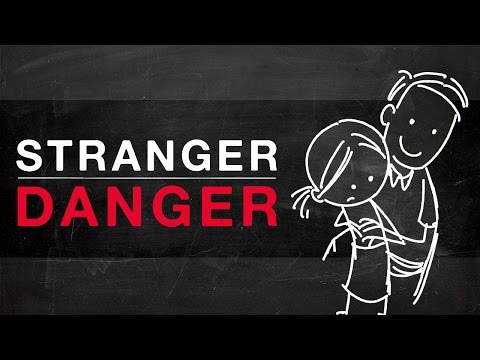
How To Keep Your Child Safe From Strangers | Child Psychology
ChannelSaral HealthDescription from the creator
An infant learns to recognize her parents within the first few months of birth by sight, sound, and smell. Until about six months of age, the baby will usually seem interested in other adults as well, engaging in games such as peek-a-boo. After six months, many babies undergo a period of fear and unhappiness around anyone except their parents. The child may burst into tears if an unknown person makes eye contact or shriek if left even momentarily in the care of an unfamiliar person.
This stranger anxiety is a normal part of a child's cognitive development . It usually begins at around eight or nine months and generally lasts into the child's second year. Normal separation anxiety develops during this same period. Both of these responses arise because the baby has reached a stage of mental development where she can differentiate her caretakers from other people, and she has a strong preference for familiar faces. Rather than indicating emotional difficulties, the emergence of a fear of strangers in the second half of the first year is an indicator of mental development.
Infants may react immediately and vigorously to strangers, especially if approached suddenly or picked up by someone unfamiliar. The child may be particularly upset around people who look different to her, for example, people with glasses or men with beards. The setting and way in which the stranger approaches the child can influence how the child may respond. If the stranger approaches slowly when the caregiver is nearby, smiling and speaking softly, offering a toy, the infant will sometimes show interest rather than distress. However, the degree of distress shown by an infant to a stranger varies greatly from baby to baby, a finding that many believe to be rooted in the temperament of the infant. A genetic basis for the development of stranger anxiety has also been shown by twin research. Identical twins show more similar onset of stranger distress than fraternal twins.
As infants acquire more experience in dealing with unfamiliar persons at family outings or in day care , their anxiety about strangers diminishes. Young children show a wide variety of responses depending on the situation, their past experiences, and their natural level of sociability.
Common problems
Stranger anxiety can be upsetting to friends and relatives, who may feel rebuffed by a suddenly shy child. The baby may reject a caregiver she was previously comfortable with or grow hysterical when relatives visit. It can also be a frustrating time for the child's parents, since the baby may reject the parent who is not the principal caregiver. Parents should respect the child's fear as much as possible and allow her to approach people as she is able. If the child does not want to be hugged by or sit with a relative, it is unwise to force her. Eventually children outgrow their fear and become more tolerant of strangers.
Parental concerns
All parents are concerned about teaching their children to be wary when approached by unfamiliar adults. However, parents need to find a balance between concern and encouragement of their child's natural curiosity and friendliness, while at the same time teaching them that they should always rely on parental guidance and approval in dealing with strangers.
This stranger anxiety is a normal part of a child's cognitive development . It usually begins at around eight or nine months and generally lasts into the child's second year. Normal separation anxiety develops during this same period. Both of these responses arise because the baby has reached a stage of mental development where she can differentiate her caretakers from other people, and she has a strong preference for familiar faces. Rather than indicating emotional difficulties, the emergence of a fear of strangers in the second half of the first year is an indicator of mental development.
Infants may react immediately and vigorously to strangers, especially if approached suddenly or picked up by someone unfamiliar. The child may be particularly upset around people who look different to her, for example, people with glasses or men with beards. The setting and way in which the stranger approaches the child can influence how the child may respond. If the stranger approaches slowly when the caregiver is nearby, smiling and speaking softly, offering a toy, the infant will sometimes show interest rather than distress. However, the degree of distress shown by an infant to a stranger varies greatly from baby to baby, a finding that many believe to be rooted in the temperament of the infant. A genetic basis for the development of stranger anxiety has also been shown by twin research. Identical twins show more similar onset of stranger distress than fraternal twins.
As infants acquire more experience in dealing with unfamiliar persons at family outings or in day care , their anxiety about strangers diminishes. Young children show a wide variety of responses depending on the situation, their past experiences, and their natural level of sociability.
Common problems
Stranger anxiety can be upsetting to friends and relatives, who may feel rebuffed by a suddenly shy child. The baby may reject a caregiver she was previously comfortable with or grow hysterical when relatives visit. It can also be a frustrating time for the child's parents, since the baby may reject the parent who is not the principal caregiver. Parents should respect the child's fear as much as possible and allow her to approach people as she is able. If the child does not want to be hugged by or sit with a relative, it is unwise to force her. Eventually children outgrow their fear and become more tolerant of strangers.
Parental concerns
All parents are concerned about teaching their children to be wary when approached by unfamiliar adults. However, parents need to find a balance between concern and encouragement of their child's natural curiosity and friendliness, while at the same time teaching them that they should always rely on parental guidance and approval in dealing with strangers.
About this tutorial
Saral Health published this 1:20 video tutorial on November 4, 2015. It has been watched 8,794 times on YouTube.
- Channel
- Saral Health
- Category
- Education
- Duration
- 1:20
- Published
- November 4, 2015
- Views
- 8,794
- Likes
- 24
Tags
Share
This tutorial in other languages
- FRComment garder votre sécurité des enfants des étrangers | Psychologie de l'enfant
- ESCómo mantener su hijo seguro de extraños | Psicología infantil
- PTComo manter sua criança segura dos desconhecido | Psicologia infantil
- ITCome mantenere il vostro bambino sicuro da sconosciuti | Child Psychology
- DEWie man Ihr Kind sicher von den Fremden halten | Kinderpsychologie
- NLHoe om uw kind veilig voor Strangers Keep | Kinder psychologie
- RUКак держать ребенка в безопасности от незнакомцев | Детская психология
- PLJak Keep Your Child Safe From Strangers | Psychologia dziecięca
- JA見知らぬ人から、あなたの子供の安全を維持する方法|児童心理学
- ARكيفية ابق الآمن الطفل من الغرباء | علم نفس الطفل
- HIकैसे आपका सुरक्षित अजनबियों से बाल रखने के | बाल मनोविज्ञान
- IDCara Tetap Aman Anak Anda Dari Orang Asing | Psikologi anak