Playback starts YouTube’s embedded player (privacy-enhanced mode).
How to Make a Potato Battery using Zinc and Copper
ChannelSTEM Little ExplorersDescription from the creator
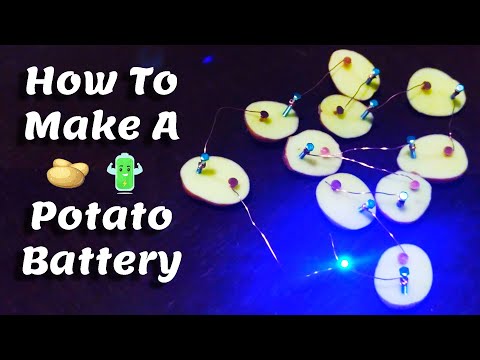
In this video, you will learn how to make easy Potato Battery that can power a small LED Lamp or you can also use it to power a clock.
All you need is galvanized nails (Zinc nails), copper nails (or copper coin), copper wire, few potatoes, and a little Led Light.
The easiest way to get the Lamp is from a Lighter, that's a 4,5 volt Lamp that is ideal for this experiment.
This is a great potato experiment that kids will love! Also, a great STEM Engineering activity that will help you learn a lot about electric power and a potato battery.
Materials needed to make a Potato Battery
- LED Lamp. If you can get your hands on the 1.5V LED lamp, that would be best. But they are rarer. The easiest one to get is from the lighter that you can buy in any convenience store or from Christmas tree decorative lamps. That one requires 3.5V but that is still good enough to create our potato battery.
- 3 to 5 Potatoes. This can vary and mostly depends on the Voltage of the lamp you will be using. We used a 3.5V lamp since it is easiest to get. Also, it can depend on the potato freshness where more fresh potatoes can produce more Voltage. But the general rule of thumb is that we need one potato per 0.5V. But don’t forget we can slice potatoes in halves and each half can produce 0.5V, so we can say that each potato (sliced in half) can produce 1V. If you plan to use slices, we can plan: 1 potato needed per 1 Volt required for our lamp.
- Copper Nails. Copper coins can work well here too, but copper nails are more convenient to work with. We can get them from any hardware store. We will need 6-12 copper nails for our battery. We need the same amount of nails as potatoes (slices).
- Zinc Nails (galvanized nails). Same as copper nails. We will need 6-12 of them and we can buy them in any hardware store.
- Copper Wire. We can also get a copper wire in the hardware store and one meter of it will be more than enough. The thinner wire you can get the better since it will be easier to wrap it around our electrodes (copper and zinc nails).
- Knife. Regular kitchen knife used to cut our potatoes on halves.
- Pliers. Used to cut and wrap our wire around nails.
What will you develop and learn by making the Potato Battery?
- Knowledge about electricity and electrical circuits
- The functioning of a battery
- How to make our own battery
- Engineering skills
- Chemistry and chemical reactions
Check the full article at
stemlittleexplorers.com/en/how-to-make-potato-b…
Visit us at stemlittleexplorers.com
And follow us at:
Facebook facebook.com/stemlittleexplorers/
Twitter twitter.com/Explorers_STEM
Pinterest pinterest.com/STEM_Little_Explorers/
Instagram instagram.com/stem_little_explorers/
Authors:
Vedran Leder & Iva Leder
Music:
"Neolith" Kevin MacLeod (incompetech.com)
Licensed under Creative Commons: By Attribution 3.0 License
creativecommons.org/licenses/by/3.0/
#potatobattery #schoolproject #stemactivity
All you need is galvanized nails (Zinc nails), copper nails (or copper coin), copper wire, few potatoes, and a little Led Light.
The easiest way to get the Lamp is from a Lighter, that's a 4,5 volt Lamp that is ideal for this experiment.
This is a great potato experiment that kids will love! Also, a great STEM Engineering activity that will help you learn a lot about electric power and a potato battery.
Materials needed to make a Potato Battery
- LED Lamp. If you can get your hands on the 1.5V LED lamp, that would be best. But they are rarer. The easiest one to get is from the lighter that you can buy in any convenience store or from Christmas tree decorative lamps. That one requires 3.5V but that is still good enough to create our potato battery.
- 3 to 5 Potatoes. This can vary and mostly depends on the Voltage of the lamp you will be using. We used a 3.5V lamp since it is easiest to get. Also, it can depend on the potato freshness where more fresh potatoes can produce more Voltage. But the general rule of thumb is that we need one potato per 0.5V. But don’t forget we can slice potatoes in halves and each half can produce 0.5V, so we can say that each potato (sliced in half) can produce 1V. If you plan to use slices, we can plan: 1 potato needed per 1 Volt required for our lamp.
- Copper Nails. Copper coins can work well here too, but copper nails are more convenient to work with. We can get them from any hardware store. We will need 6-12 copper nails for our battery. We need the same amount of nails as potatoes (slices).
- Zinc Nails (galvanized nails). Same as copper nails. We will need 6-12 of them and we can buy them in any hardware store.
- Copper Wire. We can also get a copper wire in the hardware store and one meter of it will be more than enough. The thinner wire you can get the better since it will be easier to wrap it around our electrodes (copper and zinc nails).
- Knife. Regular kitchen knife used to cut our potatoes on halves.
- Pliers. Used to cut and wrap our wire around nails.
What will you develop and learn by making the Potato Battery?
- Knowledge about electricity and electrical circuits
- The functioning of a battery
- How to make our own battery
- Engineering skills
- Chemistry and chemical reactions
Check the full article at
stemlittleexplorers.com/en/how-to-make-potato-b…
Visit us at stemlittleexplorers.com
And follow us at:
Facebook facebook.com/stemlittleexplorers/
Twitter twitter.com/Explorers_STEM
Pinterest pinterest.com/STEM_Little_Explorers/
Instagram instagram.com/stem_little_explorers/
Authors:
Vedran Leder & Iva Leder
Music:
"Neolith" Kevin MacLeod (incompetech.com)
Licensed under Creative Commons: By Attribution 3.0 License
creativecommons.org/licenses/by/3.0/
#potatobattery #schoolproject #stemactivity
About this tutorial
STEM Little Explorers published this 3:04 video tutorial on November 11, 2017. It has been watched 8,704 times on YouTube.
- Channel
- STEM Little Explorers
- Category
- Education
- Duration
- 3:04
- Published
- November 11, 2017
- Views
- 8,704
- Likes
- 89
Tags
Share
This tutorial in other languages
- FRComment faire une batterie de pommes de terre à l'aide de zinc et de cuivre
- ESCómo hacer una batería de patata utilizando zinc y cobre
- PTComo fazer uma bateria de batata usando zinco e cobre
- ITCome fare una batteria di patate con Zinco e Rame
- DEWie eine Kartoffel-Batterie, um mit Zink und Kupfer
- NLHoe maak je een aardappel batterij met behulp van zink en koper Make
- RUКак сделать Картофельный батареи с помощью цинка и меди
- PLJak zrobić baterię ziemniaków przy użyciu cynku i miedzi
- JA亜鉛と銅を使用したポテトバッテリーを作る方法
- ARكيفية جعل البطارية البطاطس باستخدام الزنك والنحاس
- HIकैसे एक आलू बैटरी जिंक और कॉपर का उपयोग कर बनाने के लिए
- IDCara Membuat Baterai Kentang menggunakan seng dan tembaga