Playback starts YouTube’s embedded player (privacy-enhanced mode).
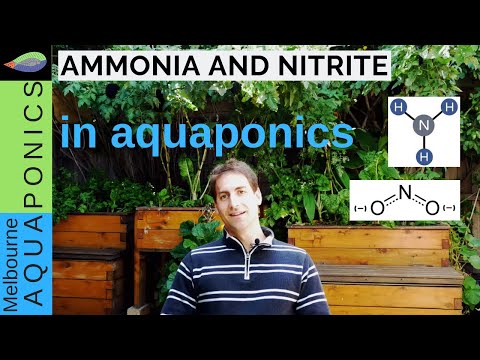
How to manage ammonia and nitrite | aquaponics water
ChannelMelbourne AquaponicsDescription from the creator
Receive your welcoming gifts now here:
1. The magical 6 STEP process to Build Your Own Aquaponics setup!
aquaponic.subscribemenow.com/
2. Aquaponics Manual Excerpt “THE ART OF AQUAPONICS”!
3. The Secret Video to keep your vegetables strong, green and healthy!
4. Your free seat for the Aquaponics Webinar here:
==============
Video description
==============
One of the main difference between backyard aquaponics and intensive agriculture/aquaculture reside on the fact that we create an environment where living creatures are living in comfortable condition. Unlike the classic food production system we aim to not spray pesticides but to offer the best environment to our ecosystem to avoid the stress and the apparition of disease.
Water parameters are massively important for your fish health. In the nitrogen cycle the bacteria are transforming the fish poo (ammonia) in nitrite and nitrate. Ammonia and nitrite are highly toxic for the fish and we want to make sure we keep them at the lowest concentration possible (below 0.5ppm).
The impact of those toxic elements on the fish are very wide. Among them we can note the following:
o Reduce oxygen in blood
o Attack:
Liver
Retina
o Strange behaviour (swim on the side, gasping behaviour)
o Brown gills and blood
o Poor feed conversion
o Poor growth
o Fast swimming
o Fast breathing
o More disease
o Increased mucus production
o Darkening of body colouration
Seeing this long list of terrible effects we can understand the importance of keeping ammonia and nitrite low for the fish welfare!
One of the solution to avoid ammonia and nitrite is to have a very well adapted biological “filtration”. I mean a nice population of bacteria able to transform those toxic elements in nitrate. The trick is therefore to keep a low density of fish compared to the population of bacteria (exact ratio available in the free aquaponics training).
Plants are still in need of nitrate which is their main nutrient so you still need a certain quantity of fish in your ecosystem
Most fish species will accept 0.5ppm of ammonia or nitrite for a limited period of time but they will appreciate and live more comfortably a concentration between 0 and 0.2ppm.
I recommend beginners to test the water once a week and to monitor ammonia and nitrite. If a spick is detected please stop feeding your fish, renew some water and during the following days decrease the fish biomass by fishing a few fish.
============
Our support:
============
1. Online Aquaponics Training Course The Ultimate Training!
"EASY AQUAPONICS" TRAINING
2. Our Digital Aquaponics Manual “THE ART OF AQUAPONICS”!
==========
Follow me:
==========
1. Our Website “Melbourne Aquaponics
2. Receive all our new youtube videos: youtube.com/channel/UCZ1Otify84TlwZ90OJ18SAQ?su…
3. Visit my Facebook page
facebook.com/groups/391606577871990/
===============
Link of the vidéo
===============
How to manage ammonia and nitrite | aquaponics water: youtu.be/D1JvFSjvmaY
About this tutorial
Melbourne Aquaponics published this 7:33 video tutorial on November 6, 2019. It has been watched 8,921 times on YouTube.
- Channel
- Melbourne Aquaponics
- Category
- Education
- Duration
- 7:33
- Published
- November 6, 2019
- Views
- 8,921
- Likes
- 121
Tags
Share
This tutorial in other languages
- FRComment gérer l'ammoniac et le nitrite | l'eau aquaponique
- ES¿Cómo gestionar el amoníaco y el nitrito | agua acuaponia
- PTComo gerir amônia e nitrito | água aquaponics
- ITCome gestire l'ammoniaca e nitriti | acqua aquaponics
- DEWie verwalte Ammoniak und Nitrit | aquaponics Wasser
- NLHoe kan ammoniak en nitriet te beheren | aquaponics water
- RUКак управлять аммиаком и нитритами | Aquaponics воды
- PLJak zarządzać amoniak i azotyny | aquaponics woda
- JAアンモニアや亜硝酸塩を管理する方法|アクアポニックスの水
- ARكيفية إدارة الأمونيا والنيتريت | المياه aquaponics
- HIकैसे अमोनिया और नाइट्राइट का प्रबंधन करने | aquaponics पानी
- IDBagaimana mengelola amonia dan nitrit | air aquaponics