Playback starts YouTube’s embedded player (privacy-enhanced mode).
How to Test for and Treat Combined Chlorine
ChannelSwimming Pool Tips, Reviews & How To - SPLDescription from the creator
WEBSITE: swimmingpoollearning.com/
YouTube Video Index -- A list of all of my videos: poolmandave.blogspot.com/2014/03/swimming-pool-…
Here is a video covering a very common problem called Combined Chlorine or sometimes referred to as Chloramines . Basically your water will be clear with a touch of cloudiness or very cloudy and you will smell a foul chemical odor coming from the water and on the swimmers as they exit the pool. That is the ammonia and nitrogen compounds reacting to the chlorine in the water. The water is technically not unsafe as the chlorine is still working, but the side effects of itchy skin and burning eyes as well as the odor should tell you something is not entirely right.
I can't tell you how often I will be at a hotel or the YMCA and someone will comment that the pool must be safe because they can smell the chlorine. It is just the opposite --chlorine working properly will give off no chemical odor.
So how to rid yourself of this problem? First, try not to let the Free Chlorine drop below 1.5 ppm as this is the first factor in combined chlorine -- low sanitizing levels. If you are having a large party have the swimmers hose off before entering the pool and make sure that the little ones (and sometimes big ones!) get out to use the bathroom. Urine and body fluids are a big contributor to combined chlorine.
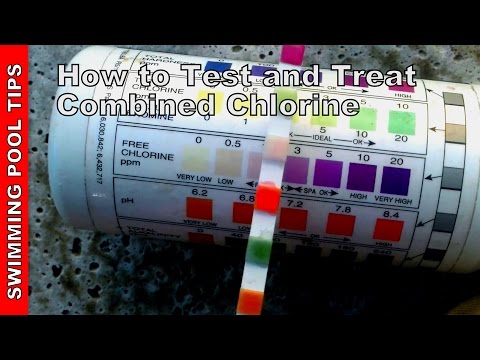
So test the water for any combined chlorine -- I like the Aqauchek strips as they are easy to read and pretty dead on accurate. Match the numbers of Total Chlorine and Free Chlorine. The numbers and colors should match up exactly or pretty close -- if not there is combined chlorine in the water.
Like I mentioned early another good indicator is the odor and the cloudy water. Once you know the amount of combined chlorine you can effectively shock the pool.
A good rule of thumb is to bring the chlorine level up to 5-10 ppm in your pool and try to keep it there for 18-24 hours. 36 hours is even better. I prefer to err on the high side so 10 ppm is the number I shoot for. You may need to add some chlorine neutralizer after this if you plan on swimming right after the treatment. You can also take the amount of combined chlorine and multiply that number by ten and then bring the free chlorine level up to that level. Usually a shock treatment of 10 ppm will cover most combined chlorine ranges unless your number is super high. I can't recommend going higher than 10 ppm at the start as you will have some trouble bringing that number back down. Shocking will also clear up cloudy water in the same process.
I will also add a strong non-chlorine oxidizer like the Shocktrine in the water. This is a great way to insure that the combined chlorine will be eliminated. Shocking should do the trick but the oxidizer is just a bit of insurance.
Related Videos:
Cloudy Pool Water, Causes and Cures: youtu.be/R2of9Kg8PV4
How Much Chlorine do I Add to My Pool?: youtu.be/sAbQO1F_7Z0
How to Check the Cyanuric Acid (Conditioner) Level : youtu.be/jHzMslp6Yj0
Available Chlorine % - How Much Chlorine is in the Product?: youtu.be/qkoWTXOukgQ
Pool Test Kit: Chlorine, PH and Acid Demand: youtu.be/mKD7fphxWJI
Taylor Test Kit (K-1006 - K-2150): youtu.be/AMe0rJJli8A
Aquachek & HTH Test Strips: youtu.be/hHhabkd5A0s
To calculate your pool volume (how many gallons): youtu.be/LArc7puehAk
SANITIZERS:
Liquid Chlorine Pool Sanitizer: youtu.be/NqJsuCqH42w
Pool Shock, Cal Hypo: youtu.be/Gk_7olejkwM
Trichlor 3" Chlorinating Tablets: youtu.be/mq58LXe0v-4
Dichlor Pool Sanitizer: youtu.be/E_gzrF1xORg
Kem-Tek Super Shock Quick, Trichlor Shock: youtu.be/-yFD2C5htQQ
Mrdgvb1 Social Media Links:
Google +: plus.google.com/b/107735343574734346096/
Blogger: poolmandave.blogspot.com/
Facebook: facebook.com/pages/Youtube-Mrdgvb1/381257741926…
YouTube Video Index -- A list of all of my videos: poolmandave.blogspot.com/2014/03/swimming-pool-…
Here is a video covering a very common problem called Combined Chlorine or sometimes referred to as Chloramines . Basically your water will be clear with a touch of cloudiness or very cloudy and you will smell a foul chemical odor coming from the water and on the swimmers as they exit the pool. That is the ammonia and nitrogen compounds reacting to the chlorine in the water. The water is technically not unsafe as the chlorine is still working, but the side effects of itchy skin and burning eyes as well as the odor should tell you something is not entirely right.
I can't tell you how often I will be at a hotel or the YMCA and someone will comment that the pool must be safe because they can smell the chlorine. It is just the opposite --chlorine working properly will give off no chemical odor.
So how to rid yourself of this problem? First, try not to let the Free Chlorine drop below 1.5 ppm as this is the first factor in combined chlorine -- low sanitizing levels. If you are having a large party have the swimmers hose off before entering the pool and make sure that the little ones (and sometimes big ones!) get out to use the bathroom. Urine and body fluids are a big contributor to combined chlorine.
So test the water for any combined chlorine -- I like the Aqauchek strips as they are easy to read and pretty dead on accurate. Match the numbers of Total Chlorine and Free Chlorine. The numbers and colors should match up exactly or pretty close -- if not there is combined chlorine in the water.
Like I mentioned early another good indicator is the odor and the cloudy water. Once you know the amount of combined chlorine you can effectively shock the pool.
A good rule of thumb is to bring the chlorine level up to 5-10 ppm in your pool and try to keep it there for 18-24 hours. 36 hours is even better. I prefer to err on the high side so 10 ppm is the number I shoot for. You may need to add some chlorine neutralizer after this if you plan on swimming right after the treatment. You can also take the amount of combined chlorine and multiply that number by ten and then bring the free chlorine level up to that level. Usually a shock treatment of 10 ppm will cover most combined chlorine ranges unless your number is super high. I can't recommend going higher than 10 ppm at the start as you will have some trouble bringing that number back down. Shocking will also clear up cloudy water in the same process.
I will also add a strong non-chlorine oxidizer like the Shocktrine in the water. This is a great way to insure that the combined chlorine will be eliminated. Shocking should do the trick but the oxidizer is just a bit of insurance.
Related Videos:
Cloudy Pool Water, Causes and Cures: youtu.be/R2of9Kg8PV4
How Much Chlorine do I Add to My Pool?: youtu.be/sAbQO1F_7Z0
How to Check the Cyanuric Acid (Conditioner) Level : youtu.be/jHzMslp6Yj0
Available Chlorine % - How Much Chlorine is in the Product?: youtu.be/qkoWTXOukgQ
Pool Test Kit: Chlorine, PH and Acid Demand: youtu.be/mKD7fphxWJI
Taylor Test Kit (K-1006 - K-2150): youtu.be/AMe0rJJli8A
Aquachek & HTH Test Strips: youtu.be/hHhabkd5A0s
To calculate your pool volume (how many gallons): youtu.be/LArc7puehAk
SANITIZERS:
Liquid Chlorine Pool Sanitizer: youtu.be/NqJsuCqH42w
Pool Shock, Cal Hypo: youtu.be/Gk_7olejkwM
Trichlor 3" Chlorinating Tablets: youtu.be/mq58LXe0v-4
Dichlor Pool Sanitizer: youtu.be/E_gzrF1xORg
Kem-Tek Super Shock Quick, Trichlor Shock: youtu.be/-yFD2C5htQQ
Mrdgvb1 Social Media Links:
Google +: plus.google.com/b/107735343574734346096/
Blogger: poolmandave.blogspot.com/
Facebook: facebook.com/pages/Youtube-Mrdgvb1/381257741926…
About this tutorial
Swimming Pool Tips, Reviews & How To - SPL published this 5:22 video tutorial on November 4, 2013. It has been watched 219,692 times on YouTube.
- Category
- Education
- Duration
- 5:22
- Published
- November 4, 2013
- Views
- 219,692
- Likes
- 417
Tags
Share
This tutorial in other languages
- FRComment tester et traiter chlore combiné
- ESCómo realizar la prueba y tratar cloro combinado
- PTComo testar e tratar Combinada Cloro
- ITCome prova per e trattare cloro combinato
- DEWie man Test für und Treat gebundenes Chlor
- NLHoe te testen voor en Treat gecombineerde Chloor
- RUКак проверить и Treat Совмещенный хлору
- PLJak test na chlor i Treat
- JAどのようにテスト用とトリート結合塩素へ
- ARكيفية اختبار وعلاج المشتركة الكلور
- HIकैसे टेस्ट करने के लिए और उपचार संयुक्त क्लोरीन
- IDCara uji dan Treat Gabungan Klorin