Playback starts YouTube’s embedded player (privacy-enhanced mode).
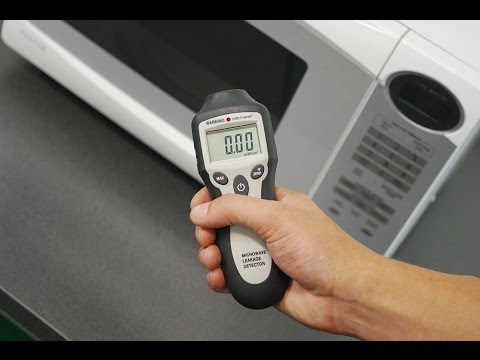
How to test for Microwave Leakage
ChannelTest and Tag TrainingDescription from the creator
Knowing how to use a microwave leakage detector can be a handy add-on for anyone who offers test and tag as service.
Microwave Leakage Testing falls under the Australian Standard AS/NZS 60335.2.25 – household and similar electrical appliances safety. It’s worth pointing out that electrically testing a microwave is a separate procedure that’s covered under the AS/NZS3760 Standard.
The reason for doing this separate test is that radiation has the potential to leak through the door and seals, which in high doses can be harmful to anyone that goes near that microwave oven. So essentially, we’re checking that the radiation levels around the microwave are below the specified limit of 5mW/cm2.
To conduct a microwave leakage test correctly, you’ll need a couple of items:
- A standard microwave leakage detector
- Microwave leakage labels
Step 1: To clear the info on the microwave leakage tester, hold your finger down on the ‘ZERO’ button until you hear a beep.
Step 2: Attach a spacer to ensure you’re measuring from the correct distance
Step 3: Press the ‘MAX’ button - this will enable the tester to provide us with the highest readout on the digital display. This will need to be recorded on our label later on.
Step 4: Place a cup of water inside the microwave oven and press the start button.
Step 5: We now use our microwave leakage tester to test for any leakages by running it across the edges, seals and glass window.
Step 6: We’ll now be given a measurement value on our digital display. This value needs to be lower than 5mW/cm2 to pass the Australian Standard. If this value does go above the threshold, the leakage detector will noticeably shine its red LED light.
Step 7: Lastly, fill out a microwave test label and stick it on the side of the appliance. You’ll need specify who tested it, radiation levels (your reading), power level of the microwave and the next test date. The frequency of this test is conducted yearly.
To view this microwave leakage tester specifically: bit.ly/28LTbLM
Microwave Leakage Testing falls under the Australian Standard AS/NZS 60335.2.25 – household and similar electrical appliances safety. It’s worth pointing out that electrically testing a microwave is a separate procedure that’s covered under the AS/NZS3760 Standard.
The reason for doing this separate test is that radiation has the potential to leak through the door and seals, which in high doses can be harmful to anyone that goes near that microwave oven. So essentially, we’re checking that the radiation levels around the microwave are below the specified limit of 5mW/cm2.
To conduct a microwave leakage test correctly, you’ll need a couple of items:
- A standard microwave leakage detector
- Microwave leakage labels
Step 1: To clear the info on the microwave leakage tester, hold your finger down on the ‘ZERO’ button until you hear a beep.
Step 2: Attach a spacer to ensure you’re measuring from the correct distance
Step 3: Press the ‘MAX’ button - this will enable the tester to provide us with the highest readout on the digital display. This will need to be recorded on our label later on.
Step 4: Place a cup of water inside the microwave oven and press the start button.
Step 5: We now use our microwave leakage tester to test for any leakages by running it across the edges, seals and glass window.
Step 6: We’ll now be given a measurement value on our digital display. This value needs to be lower than 5mW/cm2 to pass the Australian Standard. If this value does go above the threshold, the leakage detector will noticeably shine its red LED light.
Step 7: Lastly, fill out a microwave test label and stick it on the side of the appliance. You’ll need specify who tested it, radiation levels (your reading), power level of the microwave and the next test date. The frequency of this test is conducted yearly.
To view this microwave leakage tester specifically: bit.ly/28LTbLM
About this tutorial
Test and Tag Training published this 1:20 video tutorial on November 10, 2016. It has been watched 77,638 times on YouTube.
- Channel
- Test and Tag Training
- Category
- Education
- Duration
- 1:20
- Published
- November 10, 2016
- Views
- 77,638
- Likes
- 225
Tags
Share
This tutorial in other languages
- FRComment tester pour micro-ondes Fuites
- ESComo prueba de fugas de microondas
- PTComo testar for Microwave Vazamento
- ITCome testare for Microwave dispersione
- DEWie für Mikrowellenleckage testen
- NLHoe om te testen op het lekken van microgolven
- RUКак проверить СВЧ утечки
- PLJak przetestować dla Microwave Nieszczelność
- JA電子レンジ漏れをテストする方法
- ARكيفية اختبار للميكروويف التسرب
- HIकैसे माइक्रोवेव रिसाव के लिए परीक्षण करने के लिए
- IDBagaimana untuk menguji Microwave Kebocoran