Playback starts YouTube’s embedded player (privacy-enhanced mode).
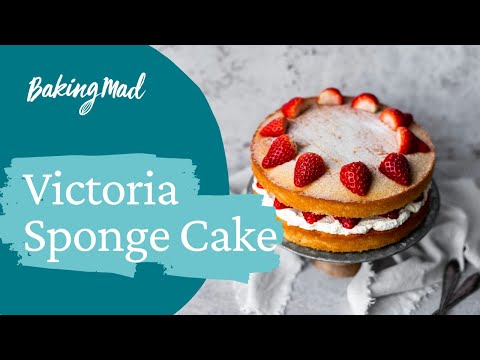
How to Make a Victoria Sponge Cake | Baking Mad
ChannelBaking MadDescription from the creator
Baking Mad show you how to make a Victoria Sponge Cake. This Victoria Sponge Cake recipe is a classic in the UK, it was named after Queen Victoria. A sponge cake is similar to a pound cake in the US. The ingredients all weigh the same.
For a simple sponge cake recipe, click here;
bakingmad.com/recipe/victoria-sponge
Recipe:
200g Butter (unsalted)
200g White caster sugar
3 Egg(s) (free range) (at room temperature)
200g Self-raising white flour
1 tsp Vanilla extract
2 tbsp Milk (whole)
For the filling
250g Strawberries (washed and halved)
150ml Double cream (whipped)
0 White caster sugar (to dust)
Method:
Preheat the oven to 180°C (160°C fan, gas mark 5). Put some water in a cake tin or roasting tin and set in the bottom of the oven. Prepare the sandwich tins (2 x 7in sponge tins) by lining with baking parchment.
Cream together the butter and sugar with a wooden spoon or electric hand whisk, until pale and fluffy.
Add the eggs in 3 parts, beating well after each addition so that the egg is well incorporated. Add the vanilla. Sift the flour into the mixture and fold in lightly with a metal spoon, until the mixture is even. Add the milk and mix.
Spoon the mix into tins and bake for 20 minutes, or until a skewer inserted comes out clean. Remove and cool on a wire rack.
To assemble the cake, put a dab of cream in the centre of the serving plate, and top with one of the cakes. Spoon the whipped cream all over the base and sprinkle over the halved strawberries. Top with the other cake and decorate with strawberries. Sift over the caster sugar and serve.
For a simple sponge cake recipe, click here;
bakingmad.com/recipe/victoria-sponge
Recipe:
200g Butter (unsalted)
200g White caster sugar
3 Egg(s) (free range) (at room temperature)
200g Self-raising white flour
1 tsp Vanilla extract
2 tbsp Milk (whole)
For the filling
250g Strawberries (washed and halved)
150ml Double cream (whipped)
0 White caster sugar (to dust)
Method:
Preheat the oven to 180°C (160°C fan, gas mark 5). Put some water in a cake tin or roasting tin and set in the bottom of the oven. Prepare the sandwich tins (2 x 7in sponge tins) by lining with baking parchment.
Cream together the butter and sugar with a wooden spoon or electric hand whisk, until pale and fluffy.
Add the eggs in 3 parts, beating well after each addition so that the egg is well incorporated. Add the vanilla. Sift the flour into the mixture and fold in lightly with a metal spoon, until the mixture is even. Add the milk and mix.
Spoon the mix into tins and bake for 20 minutes, or until a skewer inserted comes out clean. Remove and cool on a wire rack.
To assemble the cake, put a dab of cream in the centre of the serving plate, and top with one of the cakes. Spoon the whipped cream all over the base and sprinkle over the halved strawberries. Top with the other cake and decorate with strawberries. Sift over the caster sugar and serve.
About this tutorial
Baking Mad published this 9:07 video tutorial on November 5, 2015. It has been watched 21,045 times on YouTube.
- Channel
- Baking Mad
- Category
- Entertainment
- Duration
- 9:07
- Published
- November 5, 2015
- Views
- 21,045
- Likes
- 127
Tags
Share
This tutorial in other languages
- FRComment faire un gâteau éponge Victoria | Faire cuire au four Mad
- ESCómo hacer un pastel de esponja Victoria | hornear Mad
- PTComo fazer um bolo de Victoria Sponge | baking Mad
- ITCome fare una torta Victoria Sponge | Baking Mad
- DEWie man eine Victoria Sponge Cake | Backen Mad
- NLHoe maak je een Victoria Sponge Cake | Baking Mad
- RUКак сделать Виктория Бисквит | выпечка Mad
- PLJak zrobić Victoria ucierane | Pieczenie Mad
- JAビクトリアスポンジケーキを作る方法|ベーキングマッド
- ARكيفية جعل كعكة فيكتوريا الإسفنج | الخبز جنون
- HIकैसे एक विक्टोरिया स्पंज केक बनाने के लिए | बेकिंग पागल
- IDCara Membuat Victoria Sponge Kue | Baking Mad