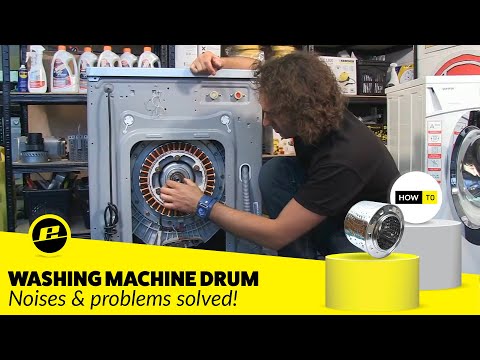
Playback starts YouTube’s embedded player (privacy-enhanced mode).
How to Diagnose Drum Problems in a Washing Machine
ChanneleSparesIn brief
Identify and diagnose common drum-related issues in a washing machine, like grinding, rattling, or banging noises during cycles or spins. This guide helps you check for worn bearings, damaged drum paddles, loose weights, and other simple fixes—great for troubleshooting before calling a repair service.
Key steps
- Listen for grinding, rattling, or banging noises during wash/spin cycles.
- Inspect drum paddle for damage or wear under the drum.
- Check for excessive movement or gaps between the door seal and drum.
- Verify if counterweights are secure or need adjustment.
- Ensure the washing machine is level on the floor.
- Look for unbalanced loads or items stuck inside the drum.
Questions & answers
What are the most common causes of drum-related washing machine noises?
Worn bearings, damaged drum paddles, loose counterweights, gaps between the door seal and drum, unbalanced loads, or items stuck inside the drum.
Chapters
Description from the creator
Washing Machine Noise and Drum Problems.
Washing machine making strange noises? Washing machine drum loose? In this video eSpares will help you diagnose your drum problems. If you're hearing loud noises during a washing machine cycle or grinding, rattling or banging noises while spinning, it could be due to a problem with the washing machine drum. This video will help you identify what is causing the washing machine noise and how to fix it.
Noise during a washing machine cycle or noises while spinning can be caused by worn bearings, drum paddle damage, too much drum movement, loose weights and gaps between the door seal and the drum. Common causes of washing machine noises can also be due to smaller issues such as items stuck in the washing machine drum, washing with an unbalanced load or if the appliance isn't level.
Take a look at the video to diagnose what is causing your washing machine to make loud noises during a spin cycle and find out how to fix it yourself.
You can find everything you need to fix and maintain your washing machine to prevent further faults on the eSpares website.
🛒 espares.co.uk/browse/at1085/washing-machines?ut…
Want to skip straight to the information you need? Here's what we talk about in each part of our video:
0:00 Video Intro: Washing Machine Noise and Drum Problems
0:16 What are the most common problems with the washing machine drum
0:43 When do the bearings on a washing machine need replacing?
1:45 How to locate and check the bearings on a washing machine
3:09 How to check the condition of the washing machine drum
3:51 How to test if the washing machine drum is damaged
4:43 How to check at the condition of the washing machine drum paddle
5:00 How to check the gap between the washing machine door seal and drum
5:13 How to check and adjust the washing machine counterweights
6:28 Why you should not be washing with an unbalanced load
7:19 How to ensure that the washing machine is level
7:37 Suggested Video: How to Prevent a Washing Machines Shaking and Spinning Noisily
Thanks for watching!
Washing machine making strange noises? Washing machine drum loose? In this video eSpares will help you diagnose your drum problems. If you're hearing loud noises during a washing machine cycle or grinding, rattling or banging noises while spinning, it could be due to a problem with the washing machine drum. This video will help you identify what is causing the washing machine noise and how to fix it.
Noise during a washing machine cycle or noises while spinning can be caused by worn bearings, drum paddle damage, too much drum movement, loose weights and gaps between the door seal and the drum. Common causes of washing machine noises can also be due to smaller issues such as items stuck in the washing machine drum, washing with an unbalanced load or if the appliance isn't level.
Take a look at the video to diagnose what is causing your washing machine to make loud noises during a spin cycle and find out how to fix it yourself.
You can find everything you need to fix and maintain your washing machine to prevent further faults on the eSpares website.
🛒 espares.co.uk/browse/at1085/washing-machines?ut…
Want to skip straight to the information you need? Here's what we talk about in each part of our video:
0:00 Video Intro: Washing Machine Noise and Drum Problems
0:16 What are the most common problems with the washing machine drum
0:43 When do the bearings on a washing machine need replacing?
1:45 How to locate and check the bearings on a washing machine
3:09 How to check the condition of the washing machine drum
3:51 How to test if the washing machine drum is damaged
4:43 How to check at the condition of the washing machine drum paddle
5:00 How to check the gap between the washing machine door seal and drum
5:13 How to check and adjust the washing machine counterweights
6:28 Why you should not be washing with an unbalanced load
7:19 How to ensure that the washing machine is level
7:37 Suggested Video: How to Prevent a Washing Machines Shaking and Spinning Noisily
Thanks for watching!
About this tutorial
eSpares published this 7:48 video tutorial on November 11, 2014. It has been watched 2,815,466 times on YouTube.
- Channel
- eSpares
- Category
- Howto & Style
- Duration
- 7:48
- Published
- November 11, 2014
- Views
- 2,815,466
- Likes
- 9,549
Tags
Share
This tutorial in other languages
- FRComment diagnostiquer les problèmes de batterie dans une machine à laver
- ESCómo diagnosticar problemas del tambor de una lavadora
- PTComo diagnosticar tambor Problemas em uma máquina de lavar
- ITCome per diagnosticare i problemi del tamburo in una lavatrice
- DEWie zu diagnostizieren Drum Probleme in einer Waschmaschine
- NLHoe wordt Drum problemen op te sporen in een wasmachine
- RUКак диагностировать Drum проблемы в стиральной машине
- PLJak Diagnozowanie problemów bębna w pralce
- JA洗濯機でドラムの問題を診断する方法
- ARكيفية تشخيص الطبل مشاكل في غسالة
- HIएक वाशिंग मशीन में ड्रम समस्याओं का निदान करने के लिए कैसे
- IDCara Mendiagnosis Masalah Drum di Mesin Cuci