Playback starts YouTube’s embedded player (privacy-enhanced mode).
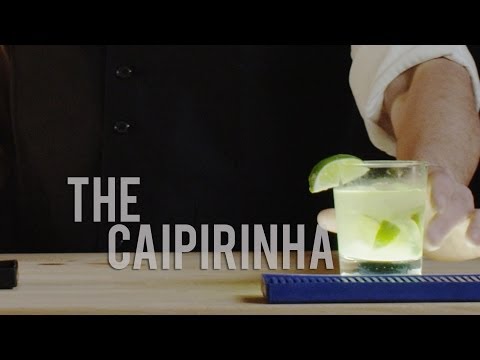
How to Make The Caipirinha - Best Drink Recipes
ChannelbestdrinkrecipesDescription from the creator
Caipirinha (Portuguese pronunciation: [kajpiˈɾĩɲɐ]) is Brazil's national cocktail, made with cachaça (pronounced: [kaˈʃasɐ]) (sugar cane hard liquor), sugar and lime. Cachaça is Brazil's most common distilled alcoholic beverage (also known as Pinga or Caninha). Both rum and cachaça are made from sugarcane-derived products. Specifically with cachaça, the alcohol results from the fermentation of sugarcane juice that is afterwards distilled.
There are many stories about the caipirinha's origin. The best known is one that begins around 1918, in the state of São Paulo. According to information, the caipirinha as we know it today would have been created from a popular recipe made with lemon, garlic and honey, indicated for patients of Spanish flu—and which, today, is still used to cure small colds. As it was quite common to put a little alcohol in any home remedy in order to expedite the therapeutic effect, rum was commonly used. "Until one day someone decided to remove the garlic and honey. Then added a few tablespoons sugar to reduce the acidity of lime. The ice came next, to ward off the heat," explains Carlos Lima, executive director of IBRAC (Brazilian Institute of Cachaça).
The caipirinha is the strongest national cocktail of Brazil, and is imbibed in restaurants, bars, and many households throughout the country. Once almost unknown outside Brazil, the drink has become more popular and more widely available in recent years, in large part due to the rising availability of first-rate brands of cachaça outside Brazil. The International Bartenders Association has designated it as one of their Official Cocktails.
There are many stories about the caipirinha's origin. The best known is one that begins around 1918, in the state of São Paulo. According to information, the caipirinha as we know it today would have been created from a popular recipe made with lemon, garlic and honey, indicated for patients of Spanish flu—and which, today, is still used to cure small colds. As it was quite common to put a little alcohol in any home remedy in order to expedite the therapeutic effect, rum was commonly used. "Until one day someone decided to remove the garlic and honey. Then added a few tablespoons sugar to reduce the acidity of lime. The ice came next, to ward off the heat," explains Carlos Lima, executive director of IBRAC (Brazilian Institute of Cachaça).
The caipirinha is the strongest national cocktail of Brazil, and is imbibed in restaurants, bars, and many households throughout the country. Once almost unknown outside Brazil, the drink has become more popular and more widely available in recent years, in large part due to the rising availability of first-rate brands of cachaça outside Brazil. The International Bartenders Association has designated it as one of their Official Cocktails.
About this tutorial
bestdrinkrecipes published this 2:10 video tutorial on November 4, 2014. It has been watched 7,638 times on YouTube.
- Channel
- bestdrinkrecipes
- Category
- Howto & Style
- Duration
- 2:10
- Published
- November 4, 2014
- Views
- 7,638
- Likes
- 64
Tags
Share
This tutorial in other languages
- FRComment faire les Caipirinha - Meilleures recettes de boissons
- ESCómo hacer que la Caipirinha - Las mejores recetas de bebidas
- PTComo fazer a caipirinha - As melhores receitas da bebida
- ITCome fare al Caipirinha - Migliori Ricette Drink
- DEWie man Die Caipirinha - Best Drink-Rezepte
- NLHoe maak je de Caipirinha - Best Drink Recipes
- RUКак сделать Кайпиринью - Лучшие рецепты напитков
- PLJak zrobić Caipirinha - najlepszym napojem Recipes
- JAベストドリンクレシピ - カイピリーニャを作る方法
- ARكيفية جعل كايبيرينها - لدينا أفضل وصفات شرب
- HIबेस्ट पी व्यंजनों - कैसे Caipirinha बनाने के लिए
- IDCara Membuat The Caipirinha - Resep Minuman Terbaik