Playback starts YouTube’s embedded player (privacy-enhanced mode).
How to Trade Cards | Pokemon
ChannelHowcastArtsRecDescription from the creator
Watch more Pokemon Trading Cards videos: howcast.com/videos/497216-How-to-Trade-Cards-Po…
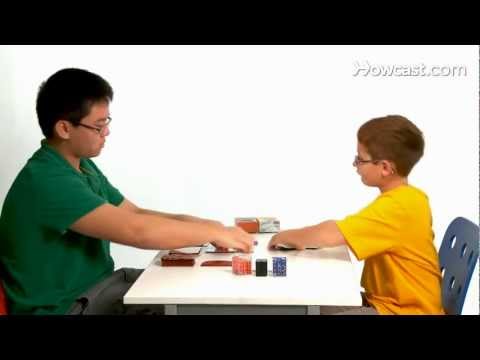
Learn how to trade Pokemon cards from the Pokemon Trading Card Game pros at Comic Cafe in this Howcast video.
Hi, I'm Joe D'Andrea, a Pokemon professor at Comic Cafe in Warren New Jersey, and we're here to show you how to play the Pokemon trading card game.
So more often than not, if you're trading Pokemon cards — after all it's a trading card game — you're going to trade cards for cards. Now you don't have to trade the same card for the same card, of course, because that's rather silly. Instead you want to trade cards of similar value, and again this is a value you both agree to before the trade takes place. When you're looking at cards to trade, look for signs of mintness, how new is the card? Of course, if it's just come out of the pack, and you saw them take it out, then you know it's brand new. Things to look for, though, would be like frayed edges that might tell that your card has been played a lot. If the edges are white, they may have been taped on the table a bit. If it's a bit flimsy or if it's even bent, all of these things lower the value of the card. If you're trading in a league, you should check with your league leader first to make sure it's a good trade, and second to have them look at the trade to see if it's a fair one. Do not be pressured into making a trade you do not want to make, and always be polite and respectful with your fellow trader. Giving up your cards is never a consequence of winning or losing at a Pokemon trading card game, be it league or tournament.
Learn how to trade Pokemon cards from the Pokemon Trading Card Game pros at Comic Cafe in this Howcast video.
Hi, I'm Joe D'Andrea, a Pokemon professor at Comic Cafe in Warren New Jersey, and we're here to show you how to play the Pokemon trading card game.
So more often than not, if you're trading Pokemon cards — after all it's a trading card game — you're going to trade cards for cards. Now you don't have to trade the same card for the same card, of course, because that's rather silly. Instead you want to trade cards of similar value, and again this is a value you both agree to before the trade takes place. When you're looking at cards to trade, look for signs of mintness, how new is the card? Of course, if it's just come out of the pack, and you saw them take it out, then you know it's brand new. Things to look for, though, would be like frayed edges that might tell that your card has been played a lot. If the edges are white, they may have been taped on the table a bit. If it's a bit flimsy or if it's even bent, all of these things lower the value of the card. If you're trading in a league, you should check with your league leader first to make sure it's a good trade, and second to have them look at the trade to see if it's a fair one. Do not be pressured into making a trade you do not want to make, and always be polite and respectful with your fellow trader. Giving up your cards is never a consequence of winning or losing at a Pokemon trading card game, be it league or tournament.
About this tutorial
HowcastArtsRec published this 1:30 video tutorial on November 8, 2011. It has been watched 733,768 times on YouTube.
- Channel
- HowcastArtsRec
- Category
- Howto & Style
- Duration
- 1:30
- Published
- November 8, 2011
- Views
- 733,768
- Likes
- 3,471
Tags
Share
This tutorial in other languages
- FRComment Chromos | Pokemon
- ESCómo operar con tarjetas | pokemon
- PTComo Trade Cards | Pokemon
- ITCome Cromo | Pokemon
- DEWie man Kaufmanns- | Pokémon
- NLHoe te Chromo | Pokemon
- RUКак торговой карты | Pokemon
- PLJak Kart Handlu | Pokemon
- JAどのように取引カードへ|ポケットモンスター
- ARكيفية بطاقات التجاري | بوكيمون
- HIकैसे व्यापार कार्ड के लिए | पोकीमॉन
- IDCara Kartu Dagang | Pokemon