Playback starts YouTube’s embedded player (privacy-enhanced mode).
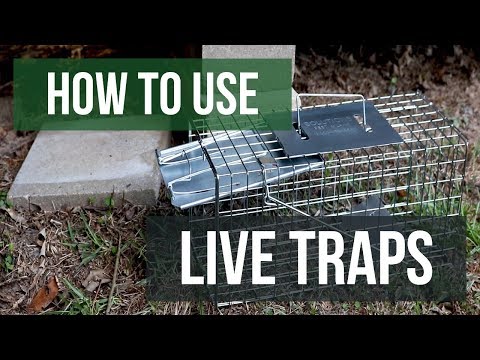
How To Use Live Traps (4 Easy Steps)
ChannelSolutions Pest & LawnDescription from the creator
bit.ly/2VSFKD0 CLICK HERE for our live animal trapping guide and to get your professional-grade products!
Shop for professional-grade live animal traps!
solutionsstores.com/havahart-live-trap
***
Want to skip ahead?
1) IDENTIFICATION & INSPECTION: 0:47
2) TREATMENT: 1:54
3) PREVENTION: 3:50
***
It’s not uncommon for homeowners to see activity from pest animals like raccoons, rabbits, or rodents. We want them gone, but we don’t necessarily want them hurt. That’s where live traps come in. So in this video, we will show you how to use humane live traps for effective and safe animal control.
The first steps for properly using live traps is identifying what kind of animal you are experiencing and where their activity is seen.
Animals will generally be in areas that are well-hidden and dark with little human activity. If you have fruits or vegetables in your garden, they may be targets for wildlife. You can also spot signs of foraging around trash cans or pet food bowls if left outside.
Make sure your trap is of an appropriate size. A trap too small won’t catch the animal, while a trap too large may offer the animal a chance to escape. You’re trap should be big enough for most of the animal’s body to fit before triggering the plate.
Set your trap where you’ve seen the most animal activity, as noted during your inspection. This will typically be along the edge of your property, near dense foliage, close to food and water. Place the trap in the shade out of sunlight to avoid overheating.
The bait you use will differ depending on the animal you are trapping. For instance, raccoons will be attracted to sweets like marshmallows, while skunks and possums will be attracted to strong smelling foods like canned fish.
To arm the trap, first open the trap door by pushing on the door lock and lifting the door plate. Keep the door plate lifted while pulling the trigger arm forward to set it. You will know it is set when the trigger arm’s hook catches the door.
Check your trap twice a day, once in the morning and once in the evening. Constantly being near the trap and checking it often will potentially dissuade animals from approaching the trap. Do not keep an animal trapped for more than 24 hours.
Be sure to visit our website for an in-depth guide and access to each of our products. We guarantee that these products and tips will help control live animals on your property, and we offer same day shipping to help you get control quickly.
Solutions is a small family owned business, and we rely on referrals from customers like you. So if you liked this how-to guide and when the products work for you, please share and tell your friends and family about us.
Thanks for watching!
Shop for professional-grade live animal traps!
solutionsstores.com/havahart-live-trap
***
Want to skip ahead?
1) IDENTIFICATION & INSPECTION: 0:47
2) TREATMENT: 1:54
3) PREVENTION: 3:50
***
It’s not uncommon for homeowners to see activity from pest animals like raccoons, rabbits, or rodents. We want them gone, but we don’t necessarily want them hurt. That’s where live traps come in. So in this video, we will show you how to use humane live traps for effective and safe animal control.
The first steps for properly using live traps is identifying what kind of animal you are experiencing and where their activity is seen.
Animals will generally be in areas that are well-hidden and dark with little human activity. If you have fruits or vegetables in your garden, they may be targets for wildlife. You can also spot signs of foraging around trash cans or pet food bowls if left outside.
Make sure your trap is of an appropriate size. A trap too small won’t catch the animal, while a trap too large may offer the animal a chance to escape. You’re trap should be big enough for most of the animal’s body to fit before triggering the plate.
Set your trap where you’ve seen the most animal activity, as noted during your inspection. This will typically be along the edge of your property, near dense foliage, close to food and water. Place the trap in the shade out of sunlight to avoid overheating.
The bait you use will differ depending on the animal you are trapping. For instance, raccoons will be attracted to sweets like marshmallows, while skunks and possums will be attracted to strong smelling foods like canned fish.
To arm the trap, first open the trap door by pushing on the door lock and lifting the door plate. Keep the door plate lifted while pulling the trigger arm forward to set it. You will know it is set when the trigger arm’s hook catches the door.
Check your trap twice a day, once in the morning and once in the evening. Constantly being near the trap and checking it often will potentially dissuade animals from approaching the trap. Do not keep an animal trapped for more than 24 hours.
Be sure to visit our website for an in-depth guide and access to each of our products. We guarantee that these products and tips will help control live animals on your property, and we offer same day shipping to help you get control quickly.
Solutions is a small family owned business, and we rely on referrals from customers like you. So if you liked this how-to guide and when the products work for you, please share and tell your friends and family about us.
Thanks for watching!
About this tutorial
Solutions Pest & Lawn published this 4:51 video tutorial on November 4, 2019. It has been watched 281,242 times on YouTube.
- Channel
- Solutions Pest & Lawn
- Category
- Howto & Style
- Duration
- 4:51
- Published
- November 4, 2019
- Views
- 281,242
- Likes
- 570
Tags
Share
This tutorial in other languages
- FRComment utiliser les pièges en direct (4 étapes faciles)
- ESCómo utilizar trampas en vivo (4 sencillos pasos)
- PTComo usar o Live Traps (4 passos fáceis)
- ITCome utilizzare Live Trappole (4 semplici passi)
- DEWie zu verwenden Live-Traps (4 einfache Schritte)
- NLHoe te gebruiken Levende Vallen (4 stappen)
- RUКак использовать живые Ловушки (4 простых шага)
- PLJak korzystać Pułapki na żywo (4 prostych krokach)
- JAどのようにするために使用するライブトラップ(4つの簡単な手順)
- ARكيفية استخدام لايف الفخاخ (4 خطوات سهلة)
- HIकैसे करने के लिए उपयोग लाइव जाल (4 इंटेल)
- IDCara Gunakan Hidup Perangkap (4 Langkah Mudah)