Playback starts YouTube’s embedded player (privacy-enhanced mode).
MACRO PHOTOGRAPHY TIPS AND TRICKS - Tutorial On Using Oil & Water
ChannelVisual Art Photography TutorialsDescription from the creator
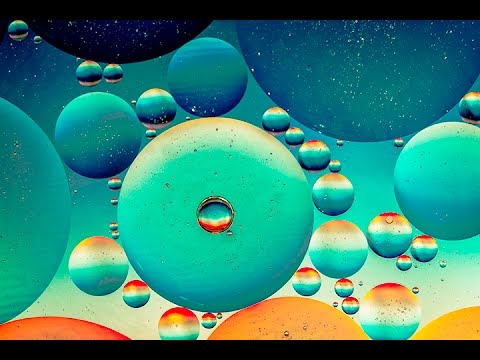
In this macro photography tutorial by Visual Art Photography, Ray Scott takes you through all the steps to create stunning, surreal abstract images without the use of Photoshop or any other processing software. In other words, JPEG pictures can be taken with great success. Using a tripod is recommended as well as a macro lens though the latter is not required. With the use of a colourful background, in this case an old blanket, a photographer can create pictures that really pop. Enjoy hours of photographing right in your home with this imaginative project. It's oil and water abstract photography at its best.
One of the playlists on this channel is called "neighbourhood photographer" which covers tutorials shot in urban and suburban areas. It's always a challenge to see different things of interest when you've been to an area many times yet this is the best way to create good images. You need to return to familiar locations many times. To do so, Ray often drives by car to an area but when he really wants to cover ground yet see things more clearly, he uses his bicycle…bike…and explores the given place.
Whether shooting landscape, macro, portrait or abstract images, Ray always tries to be aware of his surroundings to capture the best pictures possible. Part of this workflow means he is very aware of composition and uses various tips, such as the rule of thirds, as a good starting point in composing. He also likes to break rules from time to time to add new effects to his photos. Being aware of angles, shadows, shapes, lines, textures and colours goes a long way to making good pictures. He is also a big believer in "getting out there" and shooting as much as possible as it is the only way to improve and flex one's imagination. His message is it doesn't matter if you do your photography in the city, suburbs country, mountains or by the sea, just make sure you do it and follow your artistic passion.
When in studio or in the field Ray uses Canon gear. This is a choice he made years ago knowing that he was buying into a system that he could grow into. His go to camera is the Canon EOS 6D with the second camera being a Canon 5D. Lenses used are all L series f/4 except for the 50mm macro with extender. 16-35mm f/4L, 24-105mm f/4L, and 70-200mm f/4L round out the kit which is carried about with either a Lowepro Urban Reporter 250 messenger bag for city shooting or a Lowepro Sling Bag for landscape field work. While Ray does more camera handholding than before due to the image stabilization capabilities of his various lenses, he still is a believer in using his Manfrotto carbon fibre tripod. It's light and it is sturdy.
Ray is a firm believer in exposing himself to as much photography and its history as possible. By looking at other people's photos, he has gained a big appreciation of what this medium has to offer. Ray doesn't think that "copying" someone else's style is a good thing but rather feels that exposing oneself to others work can work as a teaching and inspirational tool. With this in mind, Ray has amassed a list of favorite photographers that he uses for inspiration. Some of these artistic photographers are Galen Rowell, Ansel Adams, Frans Lanting, Annie Leibovitz, Henri Cartier-Bresson, Robert Capa, Freeman Patterson, William Neil and Richard Avedon.
Find me also on…
Twitter...twitter.com/visart66
Facebook...facebook.com/visart66?ref=hl
One of the playlists on this channel is called "neighbourhood photographer" which covers tutorials shot in urban and suburban areas. It's always a challenge to see different things of interest when you've been to an area many times yet this is the best way to create good images. You need to return to familiar locations many times. To do so, Ray often drives by car to an area but when he really wants to cover ground yet see things more clearly, he uses his bicycle…bike…and explores the given place.
Whether shooting landscape, macro, portrait or abstract images, Ray always tries to be aware of his surroundings to capture the best pictures possible. Part of this workflow means he is very aware of composition and uses various tips, such as the rule of thirds, as a good starting point in composing. He also likes to break rules from time to time to add new effects to his photos. Being aware of angles, shadows, shapes, lines, textures and colours goes a long way to making good pictures. He is also a big believer in "getting out there" and shooting as much as possible as it is the only way to improve and flex one's imagination. His message is it doesn't matter if you do your photography in the city, suburbs country, mountains or by the sea, just make sure you do it and follow your artistic passion.
When in studio or in the field Ray uses Canon gear. This is a choice he made years ago knowing that he was buying into a system that he could grow into. His go to camera is the Canon EOS 6D with the second camera being a Canon 5D. Lenses used are all L series f/4 except for the 50mm macro with extender. 16-35mm f/4L, 24-105mm f/4L, and 70-200mm f/4L round out the kit which is carried about with either a Lowepro Urban Reporter 250 messenger bag for city shooting or a Lowepro Sling Bag for landscape field work. While Ray does more camera handholding than before due to the image stabilization capabilities of his various lenses, he still is a believer in using his Manfrotto carbon fibre tripod. It's light and it is sturdy.
Ray is a firm believer in exposing himself to as much photography and its history as possible. By looking at other people's photos, he has gained a big appreciation of what this medium has to offer. Ray doesn't think that "copying" someone else's style is a good thing but rather feels that exposing oneself to others work can work as a teaching and inspirational tool. With this in mind, Ray has amassed a list of favorite photographers that he uses for inspiration. Some of these artistic photographers are Galen Rowell, Ansel Adams, Frans Lanting, Annie Leibovitz, Henri Cartier-Bresson, Robert Capa, Freeman Patterson, William Neil and Richard Avedon.
Find me also on…
Twitter...twitter.com/visart66
Facebook...facebook.com/visart66?ref=hl
About this tutorial
Visual Art Photography Tutorials published this 4:37 video tutorial on November 2, 2015. It has been watched 60,216 times on YouTube.
- Category
- Howto & Style
- Duration
- 4:37
- Published
- November 2, 2015
- Views
- 60,216
- Likes
- 908
Share
This tutorial in other languages
- FRCONSEILS macrophotographie ET ASTUCES - Tutoriel sur l'utilisation de l'huile et de l'eau
- ESTIPS fotografía macro y trucos - tutorial sobre el uso de petróleo y agua
- PTDICAS fotografia macro e truques - tutorial sobre o uso Oil & Water
- ITCONSIGLI fotografia macro E TRUCCHI - tutorial sull'uso di Oil & Water
- DEMakrophotographie TIPPS UND TRICKS - Tutorial zur Verwendung des Öl & Wasser
- NLMACRO FOTOGRAFIE TIPS EN TRUCS - Tutorial over het gebruik van Oil & Water
- RUМакросъёмка ПОЛЕЗНЫЕ СОВЕТЫ - руководство по использованию Oil & Water
- PLMACRO Porady fotograficzne i sztuczki - Tutorial na temat korzystania Oil & Water
- JAマクロ撮影のヒント - オイル&ウォーターを使用してチュートリアルに
- ARTIPS MACRO التصوير والخدع - دروس حول استخدام النفط والمياه
- HIमैक्रो फोटोग्राफी टिप्स और ट्रिक्स - ट्यूटोरियल पर तेल और पानी का उपयोग करना
- IDTIPS MAKRO FOTOGRAFI DAN TRIK - Tutorial Pada Menggunakan Minyak & Air