Playback starts YouTube’s embedded player (privacy-enhanced mode).
How to Protect Yourself After the Equifax Data Breach
ChannelMaryland Attorney GeneralDescription from the creator
Attorney General Frosh provides consumers an update on what to do, including tips on how to protect their personal information after the massive Equifax data breach. Full Press Release here: marylandattorneygeneral.gov/press/2017/091317.p…
Video Transcript:
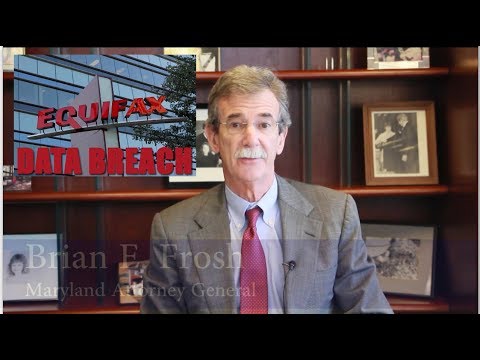
Hi, I’m Attorney General Brian Frosh.
Like many of you, I’m deeply concerned about the security of my personal information as a result of the Equifax data breach.
I am extremely concerned that a company that is in the business of collecting and maintaining private information, and providing credit monitoring and identity theft protection for consumers, exposed the social security numbers and other personal information of 143 million Americans, and 3 million Marylanders.
Equifax’s response to the data breach – in particular, their free credit monitoring service – has been confusing for many consumers.
In order to stem confusion for consumers. my office has reached out to Equifax to obtain more information, and has asked them to make revisions.
As a result, Equifax has changed it terms of service, so that consumers are no longer waiving their rights to a class action lawsuit.
They have also agreed not to request consumers’ credit card information when they sign up for the free credit file monitoring and identity theft protection they are offering to all U.S. consumers.
So what can and should consumers do in the meantime?
Check your credit reports from all three of the major credit reporting agencies: Equifax, Experian, and TransUnion. Reports can be obtained for FREE by visiting www.annualcreditreport.com or by calling 1-877-322-8228. Unrecognizable accounts or activity could indicate identity theft.
Carefully monitor your financial accounts and statements for unauthorized activity. Many financial institutions offer additional layers of protection. It is okay to call your bank to ask if there are any additional steps you can take to protect your account.
Consider signing up for the free credit monitoring service from Equifax. This service is designed to notify you of any changes to your credit reports. Equifax has created a dedicated website to assist consumers: equifaxsecurity2017.com/
Consider placing a credit freeze at all three credit reporting agencies. A credit freeze is extremely effective at preventing identity thieves from opening new accounts in your name without your consent. A credit freeze won’t prevent a thief from making charges to your existing accounts, such as debit and credit cards. Parents or guardians of minor children may also place a credit freeze on behalf of their child.
Visit www.identitytheft.gov/databreach to learn more.
My office has sent a letter to Equifax asking them to revise additional pieces of their consumer information. Please visit www.marylandattorneygeneral.gov for any additional updates.
About this tutorial
Maryland Attorney General published this 3:28 video tutorial on November 1, 2017. It has been watched 1,898 times on YouTube.
- Channel
- Maryland Attorney General
- Category
- News & Politics
- Duration
- 3:28
- Published
- November 1, 2017
- Views
- 1,898
- Likes
- 20
Share
This tutorial in other languages
- FRComment vous protéger après la rupture des données Equifax
- ESCómo protegerse Después de la Brecha de datos de Equifax
- PTComo se proteger Após a Breach Equifax Dados
- ITCome proteggersi dopo la breccia Equifax dati
- DEWie Sie sie nach den Equifax Datenpannen zu schützen
- NLHoe uzelf te beschermen Na de Equifax Gegevens Breach
- RUКак защитить себя после нарушения Екифакса данных
- PLJak chronić się po naruszeniu Equifax Danych
- JAエクイファックスデータ侵害した後あなた自身を保護する方法
- ARكيف تحمي نفسك بعد اختراق البيانات Equifax
- HIस्वयं को सुरक्षित रखने Equifax डाटा ब्रीच के बाद
- IDCara Melindungi Diri Setelah Pelanggaran Equifax data