Playback starts YouTube’s embedded player (privacy-enhanced mode).
How To Clean And Care For A Wound | First-Aid Training
ChannelDisaster Survival SkillsDescription from the creator
Get your free access to Life Saving Skills Online Video Training here: disastersurvivalskills.com/
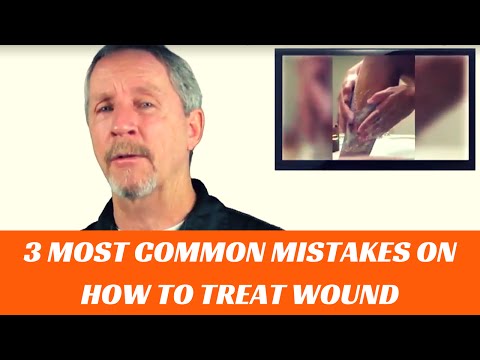
As a first aid instructor for over 25 years, one of the things I share with all my classes is that in an emergency, your actions should make things better, not worse. Wound care and treatment is one of those areas where we see a lot of mistakes made.
So first off, as with any wound, make sure any bleeding has been controlled by applying direct pressure with clean dressings. Next, clean the wound with soap and water. Take a clean wash cloth or gauze dressing and get it wet and soapy and then gently scrub the area around the wound allowing the soap and water to flow into the wound. You can wash the abrasion or wound, just be careful to scrub gently to avoid damaging any tissue.
Now normally, water by itself would just run off the wound leaving a lot of bad stuff behind. When you add soap to the water it breaks down the surface tension of the water allowing the water to get in there and flush out all the debris, dirt and germs.
Now about the things we used to use on wounds and cuts and scrapes.
Starting with Hydrogen Peroxide, which is a staple in most homes medicine cabinet. We now know this antiseptic actually does more harm than good. Because it is an oxidizer it damages tissue and capillaries, thus slowing down the healing process.
Alcohol is also something is also commonly found in most commercial first aid kits, yet it also damages and burn tissue and is painful. In the form of wipes, alcohol is normally used in the cleaning of skin before a needle stick by a doctor or paramedic. It should NEVER be used on injured tissue.
Of course iodine, betadine should also not be used for wound care.
A good antiseptic alternative is BZK (benzalkonium chloride) wipes when soap and water is not available. Because they do not contain alcohol they are safe to use on injured tissue. These wipes are a great addition to any real first aid kit. disastersurvivalskills.com/emergency-first-aid-…
==============================================
Join me on:
Facebook: facebook.com/DisasterSurvivalSkillscom/
Twitter: twitter.com/captainwayneb
Pinterest: pinterest.com/survivedisaster/
LinkedIn: linkedin.com/in/disastersurvivalskills
==============================================
Wayne Bennett is retired firefighter with over 33 years of experience in the emergency business. American Heart Association instructor, National Safety Council and FEMA CERT (community emergency response training) instructor.
We have trained over 120,000 persons how to #survive in our workshops.
As a first aid instructor for over 25 years, one of the things I share with all my classes is that in an emergency, your actions should make things better, not worse. Wound care and treatment is one of those areas where we see a lot of mistakes made.
So first off, as with any wound, make sure any bleeding has been controlled by applying direct pressure with clean dressings. Next, clean the wound with soap and water. Take a clean wash cloth or gauze dressing and get it wet and soapy and then gently scrub the area around the wound allowing the soap and water to flow into the wound. You can wash the abrasion or wound, just be careful to scrub gently to avoid damaging any tissue.
Now normally, water by itself would just run off the wound leaving a lot of bad stuff behind. When you add soap to the water it breaks down the surface tension of the water allowing the water to get in there and flush out all the debris, dirt and germs.
Now about the things we used to use on wounds and cuts and scrapes.
Starting with Hydrogen Peroxide, which is a staple in most homes medicine cabinet. We now know this antiseptic actually does more harm than good. Because it is an oxidizer it damages tissue and capillaries, thus slowing down the healing process.
Alcohol is also something is also commonly found in most commercial first aid kits, yet it also damages and burn tissue and is painful. In the form of wipes, alcohol is normally used in the cleaning of skin before a needle stick by a doctor or paramedic. It should NEVER be used on injured tissue.
Of course iodine, betadine should also not be used for wound care.
A good antiseptic alternative is BZK (benzalkonium chloride) wipes when soap and water is not available. Because they do not contain alcohol they are safe to use on injured tissue. These wipes are a great addition to any real first aid kit. disastersurvivalskills.com/emergency-first-aid-…
==============================================
Join me on:
Facebook: facebook.com/DisasterSurvivalSkillscom/
Twitter: twitter.com/captainwayneb
Pinterest: pinterest.com/survivedisaster/
LinkedIn: linkedin.com/in/disastersurvivalskills
==============================================
Wayne Bennett is retired firefighter with over 33 years of experience in the emergency business. American Heart Association instructor, National Safety Council and FEMA CERT (community emergency response training) instructor.
We have trained over 120,000 persons how to #survive in our workshops.
About this tutorial
Disaster Survival Skills published this 3:18 video tutorial on October 25, 2016. It has been watched 209,546 times on YouTube.
- Channel
- Disaster Survival Skills
- Category
- People & Blogs
- Duration
- 3:18
- Published
- October 25, 2016
- Views
- 209,546
- Likes
- 2,628
Tags
Share
This tutorial in other languages
- FRComment nettoyer et Wound Care For A | Formation aux premiers secours
- ESCómo limpiar y cuidar para una herida | Formación en primeros auxilios
- PTComo limpar e cuidar de uma ferida | Treino de primeiros socorros
- ITCome pulire e curare una ferita | Corso di primo soccorso
- DEWie zu reinigen und pflegen eine Wunde | Erste-Hilfe-Training
- NLHoe schoon te maken en te zorgen voor een Wond | Eerste hulp training
- RUКак чистить и ухаживать за ранами | Курсы первой помощи
- PLJak czyścić i dbać o ranę | Szkolenie z pierwszej pomocy
- JAどのようにきれいにし、ケアのためのAの傷|応急訓練
- ARكيفية تنظيف والعناية للحصول على الجرح | الإسعافات الأولية للتدريب
- HIकैसे साफ करने के लिए एक और के लिए देखभाल घाव | प्राथमिक उपचार प्रशिक्षण
- IDCara Membersihkan Dan Perawatan Untuk Sebuah Luka | Pertama-Aid Training