Playback starts YouTube’s embedded player (privacy-enhanced mode).
How to read the ANSI tables for inspections based on random sampling
ChannelQuality InspectionDescription from the creator
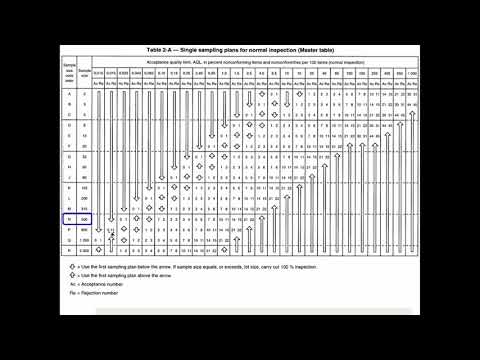
This video shows how to read the ANSI tables (also known as AQL tables).
It's not always practical to inspect 100% of the products being produced by a factory. Therefore, random sampling is used, and these tables help you to ascertain the correct number of samples for inspection.
Random sampling is useful because using statistics to decide upon the samples is better than just a fixed percentage.
We will look at the two common sampling settings:
- Normal severity
- Level II
We need to be able to answer 2 key questions:
1. How many samples to check?
2. How to decide if a batch should be accepted or rejected?
This video will show you the answers to these questions.
------------------------------------------------------------------------------------------------------------------------------------------------------------
Learn more about this topic by reading these blog posts:
- What is the “AQL” (Acceptance Quality Limit) in simple terms? (qualityinspection.org/what-is-the-aql/)
- QC Inspections: How to Read the AQL Tables (qualityinspection.org/read-aql-tables/)
- When To Do a Random AQL Inspection vs. Check 100% of the Goods (qualityinspection.org/when-to-do-a-random-aql-i…)
Over on Sofeast we also have a really useful AQL calculator which automatically works out your sampling for you! sofeast.com/glossary/aql-calculator/
It's not always practical to inspect 100% of the products being produced by a factory. Therefore, random sampling is used, and these tables help you to ascertain the correct number of samples for inspection.
Random sampling is useful because using statistics to decide upon the samples is better than just a fixed percentage.
We will look at the two common sampling settings:
- Normal severity
- Level II
We need to be able to answer 2 key questions:
1. How many samples to check?
2. How to decide if a batch should be accepted or rejected?
This video will show you the answers to these questions.
------------------------------------------------------------------------------------------------------------------------------------------------------------
Learn more about this topic by reading these blog posts:
- What is the “AQL” (Acceptance Quality Limit) in simple terms? (qualityinspection.org/what-is-the-aql/)
- QC Inspections: How to Read the AQL Tables (qualityinspection.org/read-aql-tables/)
- When To Do a Random AQL Inspection vs. Check 100% of the Goods (qualityinspection.org/when-to-do-a-random-aql-i…)
Over on Sofeast we also have a really useful AQL calculator which automatically works out your sampling for you! sofeast.com/glossary/aql-calculator/
About this tutorial
Quality Inspection published this 6:59 video tutorial on October 28, 2019. It has been watched 49,495 times on YouTube.
- Channel
- Quality Inspection
- Category
- People & Blogs
- Duration
- 6:59
- Published
- October 28, 2019
- Views
- 49,495
- Likes
- 213
Tags
Share
This tutorial in other languages
- FRComment lire les tableaux ANSI pour les inspections par échantillonnage aléatoire
- ESCómo leer las tablas ANSI para las inspecciones basadas en el muestreo aleatorio
- PTComo ler as tabelas ANSI para as inspecções por amostragem aleatória
- ITCome leggere le tabelle ANSI per le ispezioni sulla base di un campionamento casuale
- DEWie die ANSI-Tabellen für Inspektionen anhand von Stichproben lesen
- NLHoe de ANSI tafels voor inspecties te lezen op basis van een aselecte steekproef
- RUКак читать таблицы ANSI для проверок на основе случайной выборки
- PLJak czytać tabele ANSI inspekcji w formie wyrywkowej
- JAランダムサンプリングに基づく検査のためのANSI表の見方
- ARكيفية قراءة الجداول ANSI لعمليات التفتيش على أساس العينة العشوائية
- HIकैसे यादृच्छिक नमूना के आधार पर निरीक्षण के लिए एएनएसआई तालिकाओं को पढ़ने के लिए
- IDCara membaca tabel ANSI untuk inspeksi berdasarkan random sampling