Playback starts YouTube’s embedded player (privacy-enhanced mode).
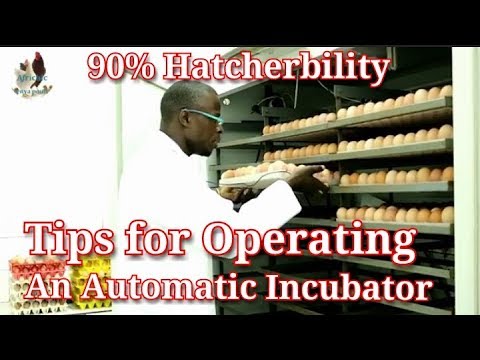
How to set & operate an Automatic egg incubator / How to set up a hatchery
ChannelAfriChicDescription from the creator
What Temperature is Best For Incubating Eggs?
See more on; youtube.com/watch?v=ZDK_16l18t4&list=UUcGEt…
For the most commonly hatched bird eggs (chicken, duck, quail, goose, pheasant, etc), the commonly accepted "ideal" temperature is 99.5F. If the temperature is too high, but not too high to kill the embryo, your eggs may hatch sooner than the normal hatch time. You may think this is a good thing, but in fact it is not. This goes against what nature has prescribed and often results in weak birds that get sick and die easily or in birth defects, such as deformed feet or heads. If the temperature is too low, but not low enough to kill the embryo, the eggs may hatch later than the normal time. This often results in too much moisture loss so they have a difficult time getting out of their shell. It also can have the same affect as having the temperature too high; weak birds that are more prone to disease and death.
Turning the Eggs
Eggs must be turned at least 2-3 times daily during the incubation period. Many experts say if you can turn them 4-5 times a day it is even better. Do not turn eggs during the last three days before hatching. The embryos are moving into hatching position and need no turning
Humidity Control
Humidity is controlled in order to prevent unnecessary loss of egg moisture. The ideal humidity level for hatching eggs is still being debated among experts, but many agree that it should not fall below 25% or above 60% between setting and three days prior to hatching. During the last three days (the "lock-down" period), the humidity level should be increased to between 70-80%.
See more on; youtube.com/watch?v=ZDK_16l18t4&list=UUcGEt…
For the most commonly hatched bird eggs (chicken, duck, quail, goose, pheasant, etc), the commonly accepted "ideal" temperature is 99.5F. If the temperature is too high, but not too high to kill the embryo, your eggs may hatch sooner than the normal hatch time. You may think this is a good thing, but in fact it is not. This goes against what nature has prescribed and often results in weak birds that get sick and die easily or in birth defects, such as deformed feet or heads. If the temperature is too low, but not low enough to kill the embryo, the eggs may hatch later than the normal time. This often results in too much moisture loss so they have a difficult time getting out of their shell. It also can have the same affect as having the temperature too high; weak birds that are more prone to disease and death.
Turning the Eggs
Eggs must be turned at least 2-3 times daily during the incubation period. Many experts say if you can turn them 4-5 times a day it is even better. Do not turn eggs during the last three days before hatching. The embryos are moving into hatching position and need no turning
Humidity Control
Humidity is controlled in order to prevent unnecessary loss of egg moisture. The ideal humidity level for hatching eggs is still being debated among experts, but many agree that it should not fall below 25% or above 60% between setting and three days prior to hatching. During the last three days (the "lock-down" period), the humidity level should be increased to between 70-80%.
About this tutorial
AfriChic published this 11:17 video tutorial on November 8, 2018. It has been watched 171,301 times on YouTube.
- Channel
- AfriChic
- Category
- People & Blogs
- Duration
- 11:17
- Published
- November 8, 2018
- Views
- 171,301
- Likes
- 1,587
Share
This tutorial in other languages
- FRComment configurer et faire fonctionner un incubateur d'œufs automatique / Comment mettre en place une écloserie
- ESCómo establecer y operar una incubadora de huevos automático / Cómo configurar un criadero
- PTComo configurar e operar uma incubadora de ovos automático / Como configurar uma incubadora
- ITCome impostare e gestire un incubatore automatico uovo / Come impostare un incubatoio
- DEWie Einrichten und betreiben einen automatischen Eibrutkasten / Wie eine Brüterei einzurichten
- NLHoe stel & exploitatie van een automatische ei incubator / Hoe het opzetten van een broederij
- RUКак установить и работать яйцо инкубатор автоматический / Как настроить инкубаторий
- PLJak ustawić i wykorzystują automatyczny jajko inkubator / Jak skonfigurować wylęgarni
- JA設定&自動卵インキュベーターを動作させるためにどのように/どのように孵化場を設定するには
- ARكيفية إعداد وتشغيل بيضة حاضنة التلقائي / كيفية إعداد مفرخ
- HI/ कैसे एक हैचरी स्थापित करने के लिए कैसे सेट और एक स्वचालित अंडा इनक्यूबेटर संचालित करने के लिए
- IDCara mengatur & mengoperasikan sebuah telur inkubator Automatic / Cara mengatur hatchery