The creator does not allow this video to be played on other websites. You can watch it directly on YouTube.
How to Assess Protein Functionality
ChannelAOCS American Oil Chemists' SocietyDescription from the creator
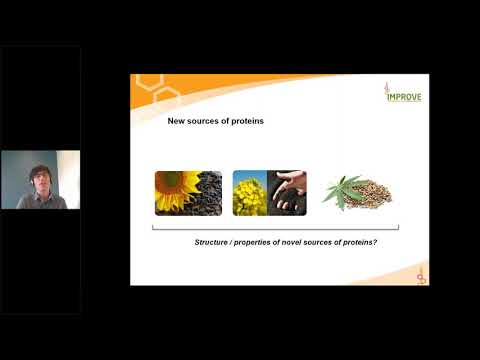
Novel sources of proteins have gained much attention in the recent years due to the increasing global demand for protein and the growing market for vegan products. Plants, algae, yeast and by-products from the food industry such as oil meals are promising sources of novel proteins. To demonstrate their capacity to replace conventional food ingredients, producers must be able measure objectively the functionality of their products.
Presenter: Frédéric Baudouin, Project Manager, IMPROVE SAS
Find out more at aocs.org/webinar
--
Novel sources of proteins have gained much attention in the recent years due to the increasing global demand for protein and the growing market for vegan products. Plants, algae, yeast and by-products from the food industry such as oil meals are promising sources of novel proteins. To demonstrate their capacity to replace conventional food ingredients, producers must be able measure objectively the functionality of their products.
Functional properties of proteins are very diverse in nature and strongly depend on the conditions of the test. Assessing protein functionality and comparing protein from different sources is therefore challenging. This presentation reviews the different methods available to measure protein functionality (emulsifying, foaming, gelling, water-holding…) and how factors such as pH, temperature or concentration may affect each test. Proteins from novel and conventional sources will be presented as illustrations.
Learning Objectives:
1) What are the different aspects of protein functionality?
2) Which tools can be used to measure the functional properties of proteins?
3) Which parameters affect the functional properties of proteins?
About the Presenter: Dr Frédéric Baudouin is project manager at IMPROVE (Amiens, France), an international R&D centre dedicated to protein extraction from novel sources. He has a PhD in Food Science obtained in 2012 at Montpellier Supagro (France) on wheat protein extraction. He has worked in several European research institutes such as Nestlé Research Center (Lausanne, Swizerland), Teagasc (Dublin, Ireland), University of Leeds (United Kingdom) on physicochemistry of proteins, development of nutritional products for elderly consumers and industrial process improvement. He has joined IMPROVE in 2018 and manages R&D projects on protein extraction and characterization within a team of 20 scientists and research technicians.
Presenter: Frédéric Baudouin, Project Manager, IMPROVE SAS
Find out more at aocs.org/webinar
--
Novel sources of proteins have gained much attention in the recent years due to the increasing global demand for protein and the growing market for vegan products. Plants, algae, yeast and by-products from the food industry such as oil meals are promising sources of novel proteins. To demonstrate their capacity to replace conventional food ingredients, producers must be able measure objectively the functionality of their products.
Functional properties of proteins are very diverse in nature and strongly depend on the conditions of the test. Assessing protein functionality and comparing protein from different sources is therefore challenging. This presentation reviews the different methods available to measure protein functionality (emulsifying, foaming, gelling, water-holding…) and how factors such as pH, temperature or concentration may affect each test. Proteins from novel and conventional sources will be presented as illustrations.
Learning Objectives:
1) What are the different aspects of protein functionality?
2) Which tools can be used to measure the functional properties of proteins?
3) Which parameters affect the functional properties of proteins?
About the Presenter: Dr Frédéric Baudouin is project manager at IMPROVE (Amiens, France), an international R&D centre dedicated to protein extraction from novel sources. He has a PhD in Food Science obtained in 2012 at Montpellier Supagro (France) on wheat protein extraction. He has worked in several European research institutes such as Nestlé Research Center (Lausanne, Swizerland), Teagasc (Dublin, Ireland), University of Leeds (United Kingdom) on physicochemistry of proteins, development of nutritional products for elderly consumers and industrial process improvement. He has joined IMPROVE in 2018 and manages R&D projects on protein extraction and characterization within a team of 20 scientists and research technicians.
About this tutorial
AOCS American Oil Chemists' Society published this 53:45 video tutorial on November 13, 2019. It has been watched 3,226 times on YouTube.
- Category
- Science & Technology
- Duration
- 53:45
- Published
- November 13, 2019
- Views
- 3,226
- Likes
- 47
Tags
Share
This tutorial in other languages
- FRComment évaluer la fonctionnalité des protéines
- ESCómo evaluar funcionalidad de las proteínas
- PTComo Avaliar a funcionalidade Protein
- ITCome valutare la funzionalità della proteina
- DEWie zur Beurteilung Protein Funktionalität
- NLHoe te eiwitfunctionaliteit Assess
- RUКак оценить Protein функциональность
- PLJak ocenić Protein funkcjonalności
- JAタンパク質の機能性を評価する方法
- ARكيفية تقييم البروتين وظيفة
- HIप्रोटीन कार्यक्षमता का आकलन कैसे
- IDCara Menilai Protein Fungsi