Playback starts YouTube’s embedded player (privacy-enhanced mode).
How to make indicator strips at home in just 1 hour
ChannelMEL ScienceDescription from the creator
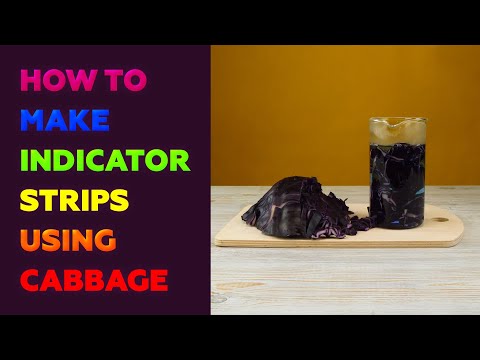
Reagents and equipment: 300 g red cabbage, 1 heat-resistant glass, 1 coffee filter, 1 pipette, cotton wool, a funnel, a cup, a knife, a cutting board, 250 mL hot water, 9% vinegar, water, 10% baking soda solution, drain cleaner (usually a 10% solution of sodium hydroxide).
Dice 300 g red cabbage. Transfer the cabbage to your heat-resistant glass and add 250 mL hot water. Let stand 30 minutes. Drain the solution into the second glass through the funnel with cotton wool to filter out the cabbage slices. Use the pipette to apply the solution to the coffee filter, then let the filter dry at room temperature for 30 minutes. Cut into strips. Calibrate using reagents you likely have on hand: vinegar creates an acidic medium, which turns the strip red; water creates a neutral medium, so the strip stays purple; the 10% baking soda solution creates a basic environment, which causes the stip to turn blue; drain cleaner (usually a 10% solution of sodium hydroxide) creates a strongly basic medium, which turns the strip first green, then yellow.
Red cabbage contains pigments known as anthocyanins. Anthocyanins can also be found in many fruits and berries, such as blueberries, red grapes, red onions, and so on. They change colors in accordance with the acidity of their environment – a property that can help you determine the pH of various substances around you! They turn red in acidic mediums such as vinegar, purple in weakly acidic and neutral mediums such as water, blue in weakly basic mediums such as a solution of baking soda, and green, then yellow in strongly basic solutions such as drain cleaner.
Safety precautions: Observe safety measures when working with heating equipment and hot liquids. When working with household chemicals, wear protective gloves, eyewear, and a mask.
Dice 300 g red cabbage. Transfer the cabbage to your heat-resistant glass and add 250 mL hot water. Let stand 30 minutes. Drain the solution into the second glass through the funnel with cotton wool to filter out the cabbage slices. Use the pipette to apply the solution to the coffee filter, then let the filter dry at room temperature for 30 minutes. Cut into strips. Calibrate using reagents you likely have on hand: vinegar creates an acidic medium, which turns the strip red; water creates a neutral medium, so the strip stays purple; the 10% baking soda solution creates a basic environment, which causes the stip to turn blue; drain cleaner (usually a 10% solution of sodium hydroxide) creates a strongly basic medium, which turns the strip first green, then yellow.
Red cabbage contains pigments known as anthocyanins. Anthocyanins can also be found in many fruits and berries, such as blueberries, red grapes, red onions, and so on. They change colors in accordance with the acidity of their environment – a property that can help you determine the pH of various substances around you! They turn red in acidic mediums such as vinegar, purple in weakly acidic and neutral mediums such as water, blue in weakly basic mediums such as a solution of baking soda, and green, then yellow in strongly basic solutions such as drain cleaner.
Safety precautions: Observe safety measures when working with heating equipment and hot liquids. When working with household chemicals, wear protective gloves, eyewear, and a mask.
About this tutorial
MEL Science published this 2:03 video tutorial on November 8, 2019. It has been watched 4,058 times on YouTube.
- Channel
- MEL Science
- Category
- Science & Technology
- Duration
- 2:03
- Published
- November 8, 2019
- Views
- 4,058
- Likes
- 60
Tags
Share
This tutorial in other languages
- FRComment faire des bandes d'indicateurs à la maison en seulement 1 heure
- ESCómo hacer tiras indicadoras en casa en tan sólo 1 hora
- PTComo fazer tiras indicadoras em casa em apenas 1 hora
- ITCome rendere le strisce indicatrici a casa in appena 1 ora
- DEWie man Indikatorstreifen zu Hause in nur 1 Stunde machen
- NLHoe maak je indicator strips te maken thuis in slechts 1 uur
- RUКак сделать индикаторные полоски дома всего за 1 час
- PLJak zrobić paski wskaźnikowe w domu w zaledwie 1 godzinę
- JAちょうど1時間に自宅でインジケータストリップを作る方法
- ARكيفية جعل شرائط مؤشر على أرضه في 1 ساعة فقط
- HIकैसे सिर्फ 1 घंटे में घर पर सूचक स्ट्रिप्स बनाने के लिए
- IDCara membuat indikator strip di rumah hanya dalam 1 jam