Playback starts YouTube’s embedded player (privacy-enhanced mode).
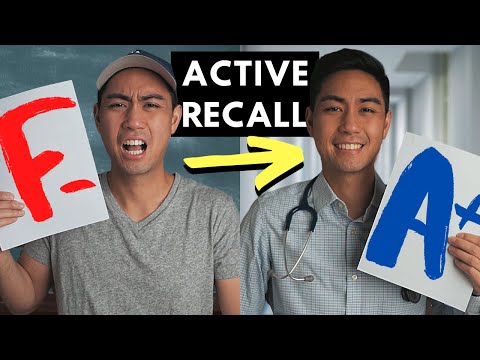
How to ACE your Exams with ACTIVE RECALL STUDYING (Evidence Based Study Tips)
ChannelMike and MattyDescription from the creator
What is active recall? It is one of the best scientifically proven study strategies and is evidence based to bring students success. It requires you to recall information that you've learned before without using any hints or clues. An easier way to understand it is by comparing it to recognition. Because unlike "recall," recognition doesn't train you to study in the exact way that you will be tested. An example of recall is using flashcards and an example of recognition is re-reading your notes in order to study for exams. By combining active recall with spaced repetition, you will be acing your exams reliably. In this video we'll also show you how to apply the concept of active recall studying to your routine immediately!
Definitely check out the app called Remnote. It is easily one of our favorite active recall and spaced repetition apps, because not only does it arrange the spaced repetition schedule for you, it also provides a very structured way to type your notes. Anki has been a staple for medical students for a very long time, but we believe that Remnote may be the next big thing! Check it out in the link below:
🚀 Study Quest - the ultimate learning experience ➔ cajunkoi.com/landings/study-quest
🦊 Join our Discord ➔ discord.com/invite/95jk7DeGpX
🎙️ The Mike & Matty Podcast ➔ youtube.com/@mikeandmattyMD
🎵 Cajun Koi Studio (our anime and music) ➔ youtube.com/@cajunkoistudio
🙏 Thanks for watching!
- Mike and Matty
#evidencebased #studytips #productivity
About this tutorial
Mike and Matty published this 5:41 video tutorial on June 26, 2020. It has been watched 58,712 times on YouTube.
- Channel
- Mike and Matty
- Category
- Education
- Duration
- 5:41
- Published
- June 26, 2020
- Views
- 58,712
- Likes
- 2,629
Tags
Share
Further reading
-
How To Study: Active Recall - The ‘High Utility’ Technique ...
aliabdaal.com
In both the verbatim test – when asked to recall facts – as well as the inference test – when asked to recall concepts – the active recall group significantly outperformed the other groups. This study shows that testing…
-
What is Active Recall? How to use it to ace your exams ...
brainscape.com
Their famous study is a bit complex, but they basically found that what matters for recalling information is how much you test yourself on it using active recall. It also demonstrates that you should use active recall o…
-
Five Scientific Steps to Ace Your Next Exam | Scott H Young
scotthyoung.com
Therefore, your studying schedule should take whatever time you have available and try to be as evenly spread as possible throughout your semester. It’s natural to study a little bit more right before the exam, but you…
This tutorial in other languages
- FRComment ACE vos examens avec RECALL ACTIVE ÉTUDIER (étude Evidence Based Conseils)
- ESComo la ECA sus exámenes con RECUPERAR EL ESTUDIO DE ACTIVO (Evidencia Consejos de estudio basados)
- PTComo Ace seus exames com RECALL ACTIVE ESTUDAR (Evidence Based Dicas de Estudo)
- ITCome ACE tuoi esami con richiamo ATTIVO LO STUDIO (Evidence Based Study Tips)
- DEWie Sie Ihre Prüfungen mit ACTIVE RECALL ACE STUDIEREN (Evidence Based Study Tips)
- NLHoe kunt u uw Examens met ACTIVE RECALL ACE studeren (Evidence Based Study Tips)
- RUКак ACE ваши экзамены с активным RECALL ИЗУЧЕНИЯ (Evidence Based Study Tips)
- PLJak ACE egzaminy z aktywnym RECALL STUDIOWANIE (Evidence Based Study porady)
- JAACTIVE RECALL勉強(エビデンスベースの研究のヒント)を使用して試験をACEにどのように
- ARكيفية ACE الامتحانات الخاصة بك مع RECALL ACTIVE STUDYING (المبني على البراهين دراسة نصائح)
- HIकैसे अध्ययन सक्रिय याद के साथ अपने परीक्षा इक्के के लिए (साक्ष्य आधारित अध्ययन टिप्स)
- IDCara ACE Ujian Anda dengan ACTIVE RECALL BELAJAR (Bukti Tips Study Berbasis)