Playback starts YouTube’s embedded player (privacy-enhanced mode).
How to Calculate Oxidation Numbers Introduction
ChannelTyler DeWittIn brief
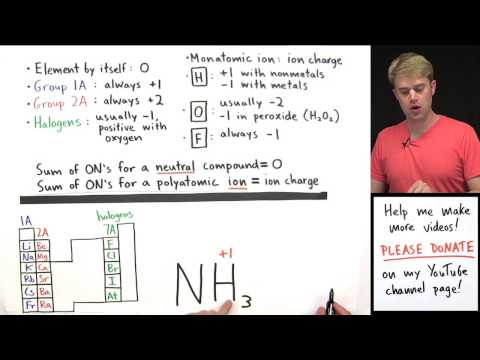
This video breaks down how to assign oxidation numbers to elements in compounds, using key rules like those for alkali metals (+1), alkaline earth metals (+2), and standalone elements (0). It’s perfect for anyone studying redox reactions or chemical bonding.
Description from the creator
We'll learn how to determine the oxidation numbers or oxidation states for a the elements in a chemical compound. The oxidation numbers tell us how electrons are divided up or shared between atoms in a chemical compound. The oxidation numbers also tell us how electrons move in an oxidation reduction (redox) reaction. There are a set a rules that we use to determine oxidation number. Group 1A elements (alkalai metals) always have an oxidation of +1. Group 2A elements (alkaline earth metals) always have an oxidation number of +2. Elements on their own have an oxidation number of 0, and monatomic ions have an oxidation number that is equal to the ionic charge.
About this tutorial
Tyler DeWitt published this 13:26 video tutorial on November 3, 2015. It has been watched 3,433,668 times on YouTube.
- Channel
- Tyler DeWitt
- Category
- Education
- Duration
- 13:26
- Published
- November 3, 2015
- Views
- 3,433,668
- Likes
- 81,643
Tags
Share
This tutorial in other languages
- FRComment nombres Calculer Oxydation Présentation
- ESCómo Calcular los números de oxidación Introducción
- PTComo Números Calcular Oxidação Introdução
- ITCome i numeri Calcolare ossidazione Introduzione
- DEWie zu berechnen Oxidationszahlen Einführung
- NLHoe te berekenen oxidatiegetallen Inleiding
- RUКак Вычислить окислени чисел Введение
- PLJak Liczb Oblicz utleniania Wprowadzenie
- JAどのように計算酸化数はじめに
- ARكيفية حساب أرقام الأكسدة مقدمة
- HIकैसे की गणना ऑक्सीकरण नंबर का परिचय
- IDCara Bilangan Hitung Oksidasi Pendahuluan