Playback starts YouTube’s embedded player (privacy-enhanced mode).
How to create a frog bog habitat
ChannelGardening AustraliaDescription from the creator
Frogs drink through their skin, so having a moist, safe place is essential for their survival. Habitat that includes plenty of insects for them to eat, logs and rocks for them to shelter in, and a location that isn’t too hot also help. It’s also crucial to not put in gold fish to your ponds, as they eat all the frog’s eggs. The Honey Blue-eye (Pseudomugil mellis), a native freshwater fish, can be used to keep mosquito larvae under control instead, as they won’t eat frog’s eggs.
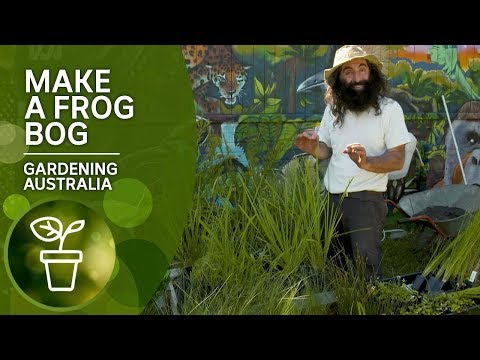
Costa builds two different types of ponds, one using a fibreglass pond shell that the preschool already had, which is turned into a bog, and the other containing deeper water using an old bath tub. This has a screen door repurposed as a cover locked over it to stop kids falling into the water, yet still allow easy access for the frogs. A viewing platform was also added so that the pre-schoolers can look at the frogs closely. And, of course, a garden to give the frogs habitat.
Vegetation layers are important to create biodiversity both in the pond and outside. We are planting indigenous/native aquatics as the priority is to create habitat for local frogs and tadpoles (shelter and cover). Some plants will grow in deeper water, others prefer shallow water and some plants tolerate moist feet (the bog plants).
We used Marsh Flower (Villarsia exaltata), Water snowflake (Nymphoides sp.), and Water Ribbons (Triglochin procerum, T. microtuberosum, T. striata) in the bath. The bog was planted with Jointed and Common Rush (Juncus sp.) and Knobbly Club Rush (Ficinia Nodosa). Around the pond edge we created lots of places for frogs to hide using leaf mulch, groundcovers like native violets (Viola hederacea), strappy plants like Mat Rush (Lomandra longifolia) and Grevillea ‘John Evans’ which flowers late winter to spring, and will attract attract insects that the frogs love to eat.
Build it and they will come! It’s illegal in lots of places to head down to the local swamp and collect tadpoles. Frogs will seek out a well-designed and well positioned bog and don’t clean the pond out too often… this upsets the little ecosystem and can do more harm than good.
Frog Friendly Tips
Put a solar powered light beside the pond to attract insects at night. This is how to attract frogs to your pond. They eat insects, and love flying insects.
Don’t use chemicals in the garden when you have frogs.
Frog Pond Step by Step
You’ll Need:
1 fibre glass shell
1 bath tub
1 aluminium mesh screen door and door latch and lock
Various grasses and aquatic plants
An old pallet
Gravel and sand
Pavers
Method:
- Make sure you firstly remove all the grass, as turf coming up through your garden will later be a maintenance issue.
- Dig a hole for the pond shells
- Level and compact the base
- Fill the pond shell with gravel and soil and used as a wet zone, then plant
- The bath tub hole is dug,
- The base is levelled and fitted with the screen cover, then planted and filled with water
- The viewing platform is placed onto a cleared area, on pavers, then pegged into place
- Logs and circular timber rounds are placed around the ponds
- Grasses and reeds and planted in the surrounding garden bed and mulched
- The grass has the soil removed and is then composted.
Watch Gardening Australia on ABC iview: iview.abc.net.au/programs/gardening-australia
SUBSCRIBE: ab.co/GardeningYouTube
About Gardening Australia:
Gardening Australia is an ABC TV program providing gardening know-how and inspiration. Presented by Australia's leading horticultural experts, Gardening Australia is a valuable resource to all gardeners through the television program, the magazine, books, DVDs and extensive online content.
Connect with other Gardening Australia fans:
Like Gardening Australia on Facebook: facebook.com/gardeningaustralia
Follow Gardening Australia on Instagram: instagram.com/gardeningaustralia
Visit the Gardening Australia website: abc.net.au/gardening
This is an official Australian Broadcasting Corporation YouTube channel.
********
Contributions may be removed if they violate ABC's Online Conditions of Use abc.net.au/conditions.htm (Section 3).
Costa builds two different types of ponds, one using a fibreglass pond shell that the preschool already had, which is turned into a bog, and the other containing deeper water using an old bath tub. This has a screen door repurposed as a cover locked over it to stop kids falling into the water, yet still allow easy access for the frogs. A viewing platform was also added so that the pre-schoolers can look at the frogs closely. And, of course, a garden to give the frogs habitat.
Vegetation layers are important to create biodiversity both in the pond and outside. We are planting indigenous/native aquatics as the priority is to create habitat for local frogs and tadpoles (shelter and cover). Some plants will grow in deeper water, others prefer shallow water and some plants tolerate moist feet (the bog plants).
We used Marsh Flower (Villarsia exaltata), Water snowflake (Nymphoides sp.), and Water Ribbons (Triglochin procerum, T. microtuberosum, T. striata) in the bath. The bog was planted with Jointed and Common Rush (Juncus sp.) and Knobbly Club Rush (Ficinia Nodosa). Around the pond edge we created lots of places for frogs to hide using leaf mulch, groundcovers like native violets (Viola hederacea), strappy plants like Mat Rush (Lomandra longifolia) and Grevillea ‘John Evans’ which flowers late winter to spring, and will attract attract insects that the frogs love to eat.
Build it and they will come! It’s illegal in lots of places to head down to the local swamp and collect tadpoles. Frogs will seek out a well-designed and well positioned bog and don’t clean the pond out too often… this upsets the little ecosystem and can do more harm than good.
Frog Friendly Tips
Put a solar powered light beside the pond to attract insects at night. This is how to attract frogs to your pond. They eat insects, and love flying insects.
Don’t use chemicals in the garden when you have frogs.
Frog Pond Step by Step
You’ll Need:
1 fibre glass shell
1 bath tub
1 aluminium mesh screen door and door latch and lock
Various grasses and aquatic plants
An old pallet
Gravel and sand
Pavers
Method:
- Make sure you firstly remove all the grass, as turf coming up through your garden will later be a maintenance issue.
- Dig a hole for the pond shells
- Level and compact the base
- Fill the pond shell with gravel and soil and used as a wet zone, then plant
- The bath tub hole is dug,
- The base is levelled and fitted with the screen cover, then planted and filled with water
- The viewing platform is placed onto a cleared area, on pavers, then pegged into place
- Logs and circular timber rounds are placed around the ponds
- Grasses and reeds and planted in the surrounding garden bed and mulched
- The grass has the soil removed and is then composted.
Watch Gardening Australia on ABC iview: iview.abc.net.au/programs/gardening-australia
SUBSCRIBE: ab.co/GardeningYouTube
About Gardening Australia:
Gardening Australia is an ABC TV program providing gardening know-how and inspiration. Presented by Australia's leading horticultural experts, Gardening Australia is a valuable resource to all gardeners through the television program, the magazine, books, DVDs and extensive online content.
Connect with other Gardening Australia fans:
Like Gardening Australia on Facebook: facebook.com/gardeningaustralia
Follow Gardening Australia on Instagram: instagram.com/gardeningaustralia
Visit the Gardening Australia website: abc.net.au/gardening
This is an official Australian Broadcasting Corporation YouTube channel.
********
Contributions may be removed if they violate ABC's Online Conditions of Use abc.net.au/conditions.htm (Section 3).
About this tutorial
Gardening Australia published this 9:46 video tutorial on October 31, 2019. It has been watched 123,095 times on YouTube.
- Channel
- Gardening Australia
- Category
- Entertainment
- Duration
- 9:46
- Published
- October 31, 2019
- Views
- 123,095
- Likes
- 1,725
Tags
Share
This tutorial in other languages
- FRComment créer une tourbière grenouille habitat
- ESCómo crear una rana del pantano hábitat
- PTComo criar um sapo pântano habitat
- ITCome creare una rana palude habitat
- DEWie schafft einen Frosch Moorlebensraum
- NLHoe maak je een kikker moeras leefgebied
- RUКак создать лягушки болото среды обитания
- PLJak stworzyć żaba bog siedlisko
- JAAカエル湿原生息環境を作成する方法
- ARكيفية إنشاء الضفدع مستنقع الموائل
- HIकैसे बनाएं एक मेंढक दलदल वास
- IDCara membuat katak rawa habitat