Playback starts YouTube’s embedded player (privacy-enhanced mode).
How to Hold & Handle a Snake | Pet Snakes
ChannelHowcastDescription from the creator
Full Playlist: youtube.com/playlist?list=PLLALQuK1NDripTjaQwbJ…
-
-
Great Amazon Must Haves for any Reptile Owner:
Zoo Med Reptile Shelter 3 in 1 Cave: amzn.to/1JyH7IK
Exo Terra Monsoon Rainfall System: amzn.to/1fVndz5
Zoo Med Desert Repti Sand: amzn.to/1iihdCj
HERPTIVITE Multivitamin for reptiles and amphibians: amzn.to/1UnuieR
Watch more How to Own a Pet Snake videos: howcast.com/videos/511028-How-to-Hold-and-Handl…
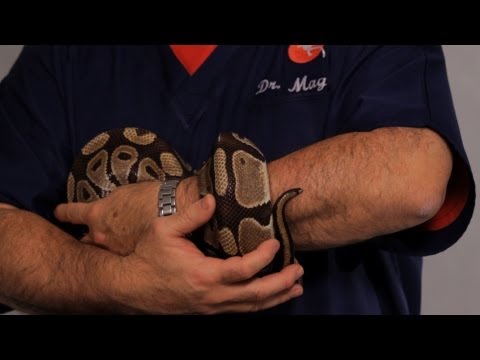
How do we hold and handle our pet snakes? It's very important number one, to understand the type of snake that you have. Now this is a ball python. He's a constrictor and it's very important that you give him something that the back end of him can hold onto. So the back one-third you want to wrap around your arm. For the smaller ones around the fingers, and then control the middle half, and then these guys are docile, so give them some room.
Let them look around. You don't need to control the head, all right. The snake will go where the head goes so if the snake is heading this way, it's a simple thing of just moving the snake in a different direction, and that's how you can control them. They go the way that their head is pointed. If you have to control the head, it is very important that you hold along the base of the head so that way you can control the teeth and the biting area.
But if you notice I don't have a lot of pressure along the bottom of the snake, and the reason for that is that's where the windpipe is. It goes down into the lung. If we squeeze in this area here, then this poor guy can't breath, and he will get a lot more feisty than just by controlling his head. So any constrictor, control the back so he feels secure, support the middle and most of the time, your docile larger snakes are fine.
Now remember that with your larger pythons and constrictors, if your snake is longer than four feet, you need one person for every four feet, because they are very powerful snakes and if they wrap around you, around your neck or something of that nature, you're going to need someone to help unwind the snake. They are stronger in the front half and weaker in the back half, so if you have to unwind them, you'll unwind from the tail to the head.
Another snake that we're going to talk about is a garter snake. Now the reason for that is, is that this one is a common pet but they aren't constrictors, so they tend to want to scoot when you bring them out. So when you bring these snakes out, it's a good idea you have two hands and intertwine the snake in your fingers, and have your thumb there support again, the middle half of the body. Let the head explore and take a look and this guy is very, very secure.
But if he was a little more nervous and would scoot, you have an area that you can hold onto before he takes off. If you were to just lay him down you'd be surprised how quickly a garter snake would take off. They are less inclined to constrict, they are not constrictors.They're more inclined to run. So your garter snake you want them to intertwine. Don't squeeze, hold them loosely, but always be on the ready with your garter that he doesn't off, and there's a few helpful hints on how to hold your snakes.
-
-
Great Amazon Must Haves for any Reptile Owner:
Zoo Med Reptile Shelter 3 in 1 Cave: amzn.to/1JyH7IK
Exo Terra Monsoon Rainfall System: amzn.to/1fVndz5
Zoo Med Desert Repti Sand: amzn.to/1iihdCj
HERPTIVITE Multivitamin for reptiles and amphibians: amzn.to/1UnuieR
Watch more How to Own a Pet Snake videos: howcast.com/videos/511028-How-to-Hold-and-Handl…
How do we hold and handle our pet snakes? It's very important number one, to understand the type of snake that you have. Now this is a ball python. He's a constrictor and it's very important that you give him something that the back end of him can hold onto. So the back one-third you want to wrap around your arm. For the smaller ones around the fingers, and then control the middle half, and then these guys are docile, so give them some room.
Let them look around. You don't need to control the head, all right. The snake will go where the head goes so if the snake is heading this way, it's a simple thing of just moving the snake in a different direction, and that's how you can control them. They go the way that their head is pointed. If you have to control the head, it is very important that you hold along the base of the head so that way you can control the teeth and the biting area.
But if you notice I don't have a lot of pressure along the bottom of the snake, and the reason for that is that's where the windpipe is. It goes down into the lung. If we squeeze in this area here, then this poor guy can't breath, and he will get a lot more feisty than just by controlling his head. So any constrictor, control the back so he feels secure, support the middle and most of the time, your docile larger snakes are fine.
Now remember that with your larger pythons and constrictors, if your snake is longer than four feet, you need one person for every four feet, because they are very powerful snakes and if they wrap around you, around your neck or something of that nature, you're going to need someone to help unwind the snake. They are stronger in the front half and weaker in the back half, so if you have to unwind them, you'll unwind from the tail to the head.
Another snake that we're going to talk about is a garter snake. Now the reason for that is, is that this one is a common pet but they aren't constrictors, so they tend to want to scoot when you bring them out. So when you bring these snakes out, it's a good idea you have two hands and intertwine the snake in your fingers, and have your thumb there support again, the middle half of the body. Let the head explore and take a look and this guy is very, very secure.
But if he was a little more nervous and would scoot, you have an area that you can hold onto before he takes off. If you were to just lay him down you'd be surprised how quickly a garter snake would take off. They are less inclined to constrict, they are not constrictors.They're more inclined to run. So your garter snake you want them to intertwine. Don't squeeze, hold them loosely, but always be on the ready with your garter that he doesn't off, and there's a few helpful hints on how to hold your snakes.
About this tutorial
Howcast published this 2:51 video tutorial on November 4, 2013. It has been watched 256,109 times on YouTube.
- Channel
- Howcast
- Category
- Howto & Style
- Duration
- 2:51
- Published
- November 4, 2013
- Views
- 256,109
- Likes
- 1,967
Tags
Share
This tutorial in other languages
- FRComment tenir et manipuler un serpent | Les serpents pour animaux
- ESCómo sostener y manejar una serpiente | serpientes del animal doméstico
- PTComo Reter e lidar com uma cobra | cobras de estimação
- ITCome tenere e gestire un serpente | Serpenti Pet
- DESo hält und eine Schlange Griff | Pet Schlangen
- NLHoe naar Hold & Behandel een Snake | Pet Snakes
- RUКак Держать и ручки Змея | Pet Змеи
- PLJak trzymać & Uchwyt węża | Pet Snakes
- JAスネーク&ホールド処理する方法|ペットのヘビ
- ARكيفية عقد والتعامل مع الأفعى | الأفاعي الحيوانات الأليفة
- HIकैसे पकड़ो और एक नाग संभाल करने के लिए | पालतू सांप
- IDCara Tahan & Menangani Ular | Pet Ular