Playback starts YouTube’s embedded player (privacy-enhanced mode).
How to Insulate a Basement | This Old House
ChannelThis Old HouseIn brief
Turn a cold basement into usable living space by sealing concrete walls, adding rigid foam insulation, and installing a wood grid for drywall. This Old House’s Tom Silva walks through the process for homeowners converting unfinished basements.
Description from the creator
This Old House general contractor Tom Silva shows how to warm up a chilly concrete wall. (See below for a shopping list and tools.)
SUBSCRIBE to This Old House: bit.ly/SubscribeThisOldHouse
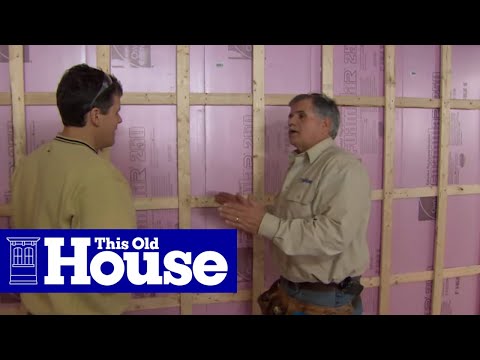
Tom helped a homeowner prepare the bare concrete walls in his basement for wallboard. The homeowner wanted to convert his unfinished basement into living space. The first step was to plug the holes in the concrete walls that might let water seep in from outside. To do this, Tom mixed up some hydraulic cement and forced it into the holes. Hydraulic cement expands as it cures, forming a watertight seal. Next, Tom used 2-inch thick foam insulating board to insulate the basement. He applied it to the concrete walls using a special foamboard adhesive. With the foam insulation installed, Tom fastened a wooden "grid" of 1x3 spruce boards over the insulation using masonry "spring spikes." This grid allows wallboard to be fastened with regular drywall screws, and gives an electrician a place to snake wires and install electric boxes for outlets and light switches.
Shopping List for How to Insulate a Basement:
plant mister [amzn.to/4ggeiXu]
tie rods [amzn.to/40DofID]
hydraulic cement [amzn.to/42TLXDt]
2-inch-thick rigid polystyrene [amzn.to/3EeA7Jw]
foam board adhesive [amzn.to/3EtDCMf]
1x3 spruce [amzn.to/40SoWzb]
4-inch-long spring spike [amzn.to/4hiHlLa]
1 5/8-inch drywall screws [amzn.to/4gf5Do8]
Tools for How to Insulate a Basement:
masonry hammer [amzn.to/2WArsqf]
center punch [amzn.to/3PZnHYK]
margin trowel [amzn.to/4hV1hUD]
caulking gun [amzn.to/3EfevN7]
chalk reel [amzn.to/4hmPP43]
hammer drill [amzn.to/4jEUeB6]
3/16-inch masonry bit [amzn.to/4jHoTh9]
drill/driver [amzn.to/4aDIyKC]
Tom used Quikrete [quikrete.com/] hydraulic cement to plug the holes in the concrete foundation
Tom used two-inch thick rigid foam insulation on the walls manufactured by Owens Corning Insulation [owenscorning.com/en-us]
Tom used masonry "spring spikes" to attach the 1x3 lumber to the concrete wall manufactured by DeWalt [anchors.dewalt.com/anchors/].
About Ask This Old House TV:
Homeowners have a virtual truckload of questions for us on smaller projects, and we're ready to answer. Ask This Old House solves the steady stream of home improvement problems faced by our viewers—and we make house calls! Ask This Old House features some familiar faces from This Old House, including Kevin O'Connor, general contractor Tom Silva, plumbing and heating expert Richard Trethewey, and landscape contractor Roger Cook.
Looking for more step by step guidance on how to complete projects around the house? Join This Old House INSIDER to stream over 1,000 episodes commercial-free: bit.ly/2GPiYbH
Plus, download our FREE app for full-episode streaming to your connected TV, phone or tablet: thisoldhouse.com/pages/streaming-app
Follow This Old House and Ask This Old House:
Facebook: bit.ly/ThisOldHouseFB
Twitter: bit.ly/ThisOldHouseTwitter
bit.ly/AskTOHTwitter
Pinterest: bit.ly/ThisOldHousePinterest
Instagram: bit.ly/ThisOldHouseIG
bit.ly/AskTOHIG
For more on This Old House and Ask This Old House, visit us at: bit.ly/ThisOldHouseWebsite
How to Insulate a Basement | This Old House
youtube.com/user/thisoldhouse/
SUBSCRIBE to This Old House: bit.ly/SubscribeThisOldHouse
Tom helped a homeowner prepare the bare concrete walls in his basement for wallboard. The homeowner wanted to convert his unfinished basement into living space. The first step was to plug the holes in the concrete walls that might let water seep in from outside. To do this, Tom mixed up some hydraulic cement and forced it into the holes. Hydraulic cement expands as it cures, forming a watertight seal. Next, Tom used 2-inch thick foam insulating board to insulate the basement. He applied it to the concrete walls using a special foamboard adhesive. With the foam insulation installed, Tom fastened a wooden "grid" of 1x3 spruce boards over the insulation using masonry "spring spikes." This grid allows wallboard to be fastened with regular drywall screws, and gives an electrician a place to snake wires and install electric boxes for outlets and light switches.
Shopping List for How to Insulate a Basement:
plant mister [amzn.to/4ggeiXu]
tie rods [amzn.to/40DofID]
hydraulic cement [amzn.to/42TLXDt]
2-inch-thick rigid polystyrene [amzn.to/3EeA7Jw]
foam board adhesive [amzn.to/3EtDCMf]
1x3 spruce [amzn.to/40SoWzb]
4-inch-long spring spike [amzn.to/4hiHlLa]
1 5/8-inch drywall screws [amzn.to/4gf5Do8]
Tools for How to Insulate a Basement:
masonry hammer [amzn.to/2WArsqf]
center punch [amzn.to/3PZnHYK]
margin trowel [amzn.to/4hV1hUD]
caulking gun [amzn.to/3EfevN7]
chalk reel [amzn.to/4hmPP43]
hammer drill [amzn.to/4jEUeB6]
3/16-inch masonry bit [amzn.to/4jHoTh9]
drill/driver [amzn.to/4aDIyKC]
Tom used Quikrete [quikrete.com/] hydraulic cement to plug the holes in the concrete foundation
Tom used two-inch thick rigid foam insulation on the walls manufactured by Owens Corning Insulation [owenscorning.com/en-us]
Tom used masonry "spring spikes" to attach the 1x3 lumber to the concrete wall manufactured by DeWalt [anchors.dewalt.com/anchors/].
About Ask This Old House TV:
Homeowners have a virtual truckload of questions for us on smaller projects, and we're ready to answer. Ask This Old House solves the steady stream of home improvement problems faced by our viewers—and we make house calls! Ask This Old House features some familiar faces from This Old House, including Kevin O'Connor, general contractor Tom Silva, plumbing and heating expert Richard Trethewey, and landscape contractor Roger Cook.
Looking for more step by step guidance on how to complete projects around the house? Join This Old House INSIDER to stream over 1,000 episodes commercial-free: bit.ly/2GPiYbH
Plus, download our FREE app for full-episode streaming to your connected TV, phone or tablet: thisoldhouse.com/pages/streaming-app
Follow This Old House and Ask This Old House:
Facebook: bit.ly/ThisOldHouseFB
Twitter: bit.ly/ThisOldHouseTwitter
bit.ly/AskTOHTwitter
Pinterest: bit.ly/ThisOldHousePinterest
Instagram: bit.ly/ThisOldHouseIG
bit.ly/AskTOHIG
For more on This Old House and Ask This Old House, visit us at: bit.ly/ThisOldHouseWebsite
How to Insulate a Basement | This Old House
youtube.com/user/thisoldhouse/
About this tutorial
This Old House published this 8:57 video tutorial on November 4, 2014. It has been watched 3,763,796 times on YouTube.
- Channel
- This Old House
- Category
- Howto & Style
- Duration
- 8:57
- Published
- November 4, 2014
- Views
- 3,763,796
- Likes
- 20,869
Tags
Share
This tutorial in other languages
- FRComment un sous-sol Isoler | Cette ancienne maison
- ES¿Cómo aislar un sótano | Esta casa vieja
- PTComo isolar um porão | This Old House
- ITCome isolare una cantina | This Old House
- DEWie ein Keller dämmen | Dieses alte Haus
- NLHoe maak je een Basement Isoleer | This Old House
- RUКак Изолировать подвал | Это старый дом
- PLJak ocieplić piwnicę | Ten stary dom
- JA地下室を絶縁する方法|このオールド・ハウス
- ARكيفية عزل الطابق السفلي | هذا البيت القديم
- HIएक तलघर बचाने के लिए | यह पुराने हाउस
- IDCara Melindungi Basement sebuah | Old House ini