Playback starts YouTube’s embedded player (privacy-enhanced mode).
How to Play Dreidel
ChannelHowcastDescription from the creator
Watch more Happy Hanukkah videos: howcast.com/videos/70572-How-to-Play-Dreidel
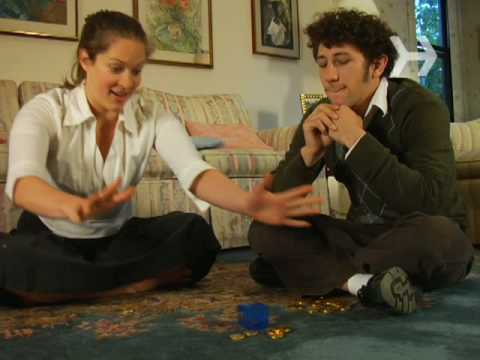
The dreidel, the small top that's among the most recognizable symbols of the Hanukkah season, is a fun game of chance to play with friends and family.
Step 1: Divide the tokens
Divide the candies, coins, or other betting tokens evenly among the players.
Tip
Dole out a minimum of ten tokens per person.
Step 2: Ante up
Each player antes up one token to begin.
Step 3: Spin the dreidel
The players take turns spinning the dreidel, which has four sides, each marked with a Hebrew letter.
Step 4: Do nothing
If the dreidel lands on "nun," which stands for the Yiddish word nisht, or "nothing," do nothing.
Step 5: Take everything
If the dreidel lands on "gimmel," which stands for the Yiddish word gantz, or "everything," you've hit the jackpot. Take all the tokens.
Step 6: Take half
If the dreidel lands on "hey," which stands for the Yiddish word halb, or "half," you win half the pot.
Tip
If there are an odd number of tokens in the pot, the player rounds up one.
Step 7: Put one in
If the dreidel lands on "shin," which stands for the Yiddish word shtel, or "put in," you have to put one of your tokens into the pot.
Step 8: Fill the pot
Whenever the pot is emptied—or gets down to one token—everyone adds a token.
Step 9: Ante up again
After every player has had a spin, everyone puts in another token and begin another round of spinning.
Step 10: Sit out
A player is out when he or she runs out of tokens.
Did You Know?
A version of the dreidel game has been played in various countries and cultures for at least 500 years.
The dreidel, the small top that's among the most recognizable symbols of the Hanukkah season, is a fun game of chance to play with friends and family.
Step 1: Divide the tokens
Divide the candies, coins, or other betting tokens evenly among the players.
Tip
Dole out a minimum of ten tokens per person.
Step 2: Ante up
Each player antes up one token to begin.
Step 3: Spin the dreidel
The players take turns spinning the dreidel, which has four sides, each marked with a Hebrew letter.
Step 4: Do nothing
If the dreidel lands on "nun," which stands for the Yiddish word nisht, or "nothing," do nothing.
Step 5: Take everything
If the dreidel lands on "gimmel," which stands for the Yiddish word gantz, or "everything," you've hit the jackpot. Take all the tokens.
Step 6: Take half
If the dreidel lands on "hey," which stands for the Yiddish word halb, or "half," you win half the pot.
Tip
If there are an odd number of tokens in the pot, the player rounds up one.
Step 7: Put one in
If the dreidel lands on "shin," which stands for the Yiddish word shtel, or "put in," you have to put one of your tokens into the pot.
Step 8: Fill the pot
Whenever the pot is emptied—or gets down to one token—everyone adds a token.
Step 9: Ante up again
After every player has had a spin, everyone puts in another token and begin another round of spinning.
Step 10: Sit out
A player is out when he or she runs out of tokens.
Did You Know?
A version of the dreidel game has been played in various countries and cultures for at least 500 years.
About this tutorial
Howcast published this 1:51 video tutorial on November 6, 2008. It has been watched 319,818 times on YouTube.
- Channel
- Howcast
- Category
- Howto & Style
- Duration
- 1:51
- Published
- November 6, 2008
- Views
- 319,818
- Likes
- 1,122