Playback starts YouTube’s embedded player (privacy-enhanced mode).
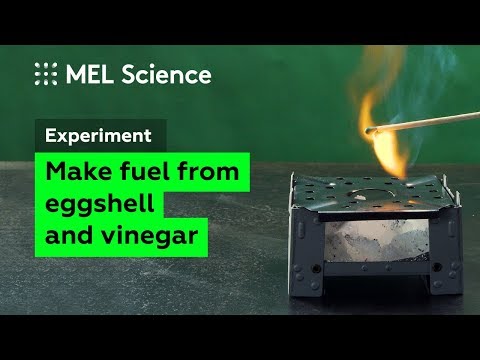
How to make fuel from eggshell and vinegar (experiment for survivals)
ChannelMEL ScienceDescription from the creator
This experiment is not included in the MEL Chemistry subscription–we just love to show you the beauty of chemistry💙
For cool and safe experiments to do at home sign up to MEL Science here: goo.gl/y3J9jr
Have you just eaten a boiled egg? Don’t throw away the shell – you can make fuel from it!
Safety precautions
Wear protective gloves, glasses and a mask and work in a well-ventilated room.
Warning! Only under adults supervision.
Reagents and equipment:
* eggshell (50 g, or you can also use chalk or building lime);
* 70% vinegar (50 ml);
* water;
* 96% ethyl alcohol;
* glass;
* rod;
* lid for the beaker;
* glass container.
Step-by-step instructions
Put the eggshell in the glass and pour acetic acid over it. Then add 30 ml of water. Close with a lid and keep it for a week in a place that is inaccessible to children and animals. Then add 30 ml of water to the glass and stir thoroughly. Filter the obtained solution through a funnel with cotton wool. In a few seconds the solution will turn into gel.
Processes description
Eggshells consist almost entirely of calcium carbonate. They dissolve in acetic acid, forming calcium acetate. If ethyl alcohol is added to a solution of calcium acetate, a combustible gel forms which can be used as a fuel tablet. The gel forms because calcium ions are solvated by molecules of ethyl alcohol, which surround the calcium ions from all sides.
This gel should be stored in a sealed container so that the alcohol does not evaporate.
For cool and safe experiments to do at home sign up to MEL Science here: goo.gl/y3J9jr
Have you just eaten a boiled egg? Don’t throw away the shell – you can make fuel from it!
Safety precautions
Wear protective gloves, glasses and a mask and work in a well-ventilated room.
Warning! Only under adults supervision.
Reagents and equipment:
* eggshell (50 g, or you can also use chalk or building lime);
* 70% vinegar (50 ml);
* water;
* 96% ethyl alcohol;
* glass;
* rod;
* lid for the beaker;
* glass container.
Step-by-step instructions
Put the eggshell in the glass and pour acetic acid over it. Then add 30 ml of water. Close with a lid and keep it for a week in a place that is inaccessible to children and animals. Then add 30 ml of water to the glass and stir thoroughly. Filter the obtained solution through a funnel with cotton wool. In a few seconds the solution will turn into gel.
Processes description
Eggshells consist almost entirely of calcium carbonate. They dissolve in acetic acid, forming calcium acetate. If ethyl alcohol is added to a solution of calcium acetate, a combustible gel forms which can be used as a fuel tablet. The gel forms because calcium ions are solvated by molecules of ethyl alcohol, which surround the calcium ions from all sides.
This gel should be stored in a sealed container so that the alcohol does not evaporate.
About this tutorial
MEL Science published this 1:21 video tutorial on October 31, 2018. It has been watched 12,103 times on YouTube.
- Channel
- MEL Science
- Category
- Science & Technology
- Duration
- 1:21
- Published
- October 31, 2018
- Views
- 12,103
- Likes
- 203
Tags
Share
This tutorial in other languages
- FRComment fabriquer du carburant à partir du vinaigre et coquille d'oeuf (expérience pour survies)
- ESCómo hacer combustible a partir de la cáscara de huevo y el vinagre (experimento de supervivencia)
- PTComo fazer combustível a partir de casca de ovo e vinagre (experimento para sobrevivências)
- ITCome rendere il carburante dal guscio d'uovo e aceto (esperimento per sopravvivenza)
- DEWie man Kraftstoff aus Eischale und Essig (Experiment für Überbleibsel) macht
- NLHoe om brandstof te maken uit eierschaal en azijn (experiment voor overblijfselen)
- RUКак сделать топливо из яичной скорлупы и уксуса (для эксперимента пережитков)
- PLJak zrobić paliwo ze skorup i ocet (doświadczenie na przetrwanie)
- JA卵殻と酢(生存のための実験)から燃料を作る方法
- ARكيفية صنع وقود من قشر البيض والخل (تجربة للقيد الحياة)
- HIखोल और सिरका (उत्तरजीविता के लिए प्रयोग) से ईंधन बनाने के लिए
- IDBagaimana membuat bahan bakar dari kulit telur dan cuka (eksperimen untuk kelangsungan hidup)