Playback starts YouTube’s embedded player (privacy-enhanced mode).
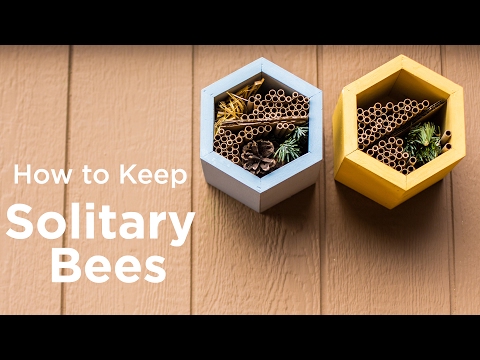
How to Keep Solitary Bees
ChannelBee BuiltChapters
Description from the creator
Learn where to hang your bee house, what you need to provide your bees with, where to get bees, and how to harvest cocoons!
Solitary bees are amazing pollinators that are incredibly easy to care for. In this video, we teach you exactly how to set up the perfect habitat for native mason and leaf cutter bees. We cover the best locations to hang your bee house and what kind of nesting tubes or trays work best.
You will also learn how to attract wild bees to your yard and how to purchase cocoons to start your own population. Providing the right mud, plants, and care will help your bees thrive. At the end of the season, harvesting and cleaning their cocoons ensures your bees stay healthy year after year.
Visit beebuilt.com/collections/garden to order your own bee house and supplies!
Don't forget to also watch ""Introduction to Solitary Bees"":
📺 Introduction to Solitary Bees: youtube.com/watch?v=vf8QyIF3eoY
Explore our top quality hives and gear here:
🐝 Shop all Bee Built Hives: beebuilt.com/collections/all-bee-hives
🛠️ Browse Beekeeping Supplies: beebuilt.com/collections/beekeeping-supplies
🌐 Visit our website: beebuilt.com
#SolitaryBees #MasonBees #BeeHouse #BeeBuilt
0:00 Finding the Optimal Location for Your Bee House
1:07 Choosing Nesting Tubes and Trays
2:25 Providing Native Forage for Your Bees
3:22 Providing Nesting Materials (Mud and Leaves)
3:52 How to Source Solitary Bees
4:25 Releasing Mason Bee Cocoons in the Spring
5:20 Releasing Leaf Cutter Bee Cocoons in the Summer
5:48 Harvesting and Cleaning Mason Bee Cocoons
7:10 Storing and Preparing Leaf Cutter Bee Cocoons
Solitary bees are amazing pollinators that are incredibly easy to care for. In this video, we teach you exactly how to set up the perfect habitat for native mason and leaf cutter bees. We cover the best locations to hang your bee house and what kind of nesting tubes or trays work best.
You will also learn how to attract wild bees to your yard and how to purchase cocoons to start your own population. Providing the right mud, plants, and care will help your bees thrive. At the end of the season, harvesting and cleaning their cocoons ensures your bees stay healthy year after year.
Visit beebuilt.com/collections/garden to order your own bee house and supplies!
Don't forget to also watch ""Introduction to Solitary Bees"":
📺 Introduction to Solitary Bees: youtube.com/watch?v=vf8QyIF3eoY
Explore our top quality hives and gear here:
🐝 Shop all Bee Built Hives: beebuilt.com/collections/all-bee-hives
🛠️ Browse Beekeeping Supplies: beebuilt.com/collections/beekeeping-supplies
🌐 Visit our website: beebuilt.com
#SolitaryBees #MasonBees #BeeHouse #BeeBuilt
0:00 Finding the Optimal Location for Your Bee House
1:07 Choosing Nesting Tubes and Trays
2:25 Providing Native Forage for Your Bees
3:22 Providing Nesting Materials (Mud and Leaves)
3:52 How to Source Solitary Bees
4:25 Releasing Mason Bee Cocoons in the Spring
5:20 Releasing Leaf Cutter Bee Cocoons in the Summer
5:48 Harvesting and Cleaning Mason Bee Cocoons
7:10 Storing and Preparing Leaf Cutter Bee Cocoons
About this tutorial
Bee Built published this 8:26 video tutorial on October 29, 2017. It has been watched 542,013 times on YouTube.
- Channel
- Bee Built
- Category
- Pets & Animals
- Duration
- 8:26
- Published
- October 29, 2017
- Views
- 542,013
- Likes
- 11,779
Tags
Share
This tutorial in other languages
- FRComment garder les abeilles solitaires
- ESCómo mantener a las abejas solitarias
- PTComo manter abelhas solitárias
- ITCome mantenere api solitarie
- DEWie halten Solitary Bees
- NLHoe maak je solitaire bijen houden
- RUКак сохранить Одиночные Пчелы
- PLJak zachować pszczół samotnic
- JA孤独なミツバチを保持する方法
- ARكيفية الحفاظ على النحل الانفرادي
- HIकैसे एकान्त मधुमक्खियों रखने के लिए
- IDBagaimana Jauhkan Solitary Lebah