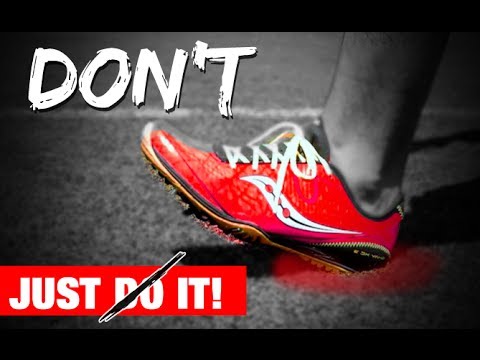
Playback starts YouTube’s embedded player (privacy-enhanced mode).
How to Run (SAFER, FASTER, WITHOUT PAIN!)
ChannelATHLEAN-X™In brief
This video helps you identify your current running style—heel, toe, or midfoot strike—and explains how each affects your joints. You’ll learn why midfoot striking is the most efficient and joint-friendly technique, along with a quick test to assess your form. Ideal for runners looking to reduce pain and improve performance.
Questions & answers
How do I know if I’m a heel, toe, or midfoot striker?
The video includes a quick test to help you identify your natural running strike by feeling where your foot first contacts the ground.
Description from the creator
Run like an athlete (and build ripped athletic muscle!)
athleanx.com/x/run-like-an-athlete
Running is one of the most fundamental forms of exercise, but it can also be one of the most destructive. There is no doubt that running and learning how to run faster is a high impact activity that can put excessive strain on your joints and ligaments in your ankles, knees, hips and lower back. Even when you learn how to run correctly, and wear the right shoes, it's still hard to completely eliminate the possibility of eventual break down.
The root of these running woes usually starts at the point of contact, at heel strike. When you run your foot contacts the ground. Where on the foot you are making that contact can have a huge say on just how bad that running can be for you long term.
If you are a heel runner, you tend to make first ground contact with your heel. This is by far one of the most impactful ways to strike the surface and one that sends shockwaves up your leg all the way to the back. There simply is very minimal shock absorption occurring in the heel and therefore this becomes a very tough way to run.
The second most common method of striking the ground during running is with the toes. Sprinters are more likely to run on their toes and therefore less likely to experience the high impact forces that are associated with heel strike runners. That said, this does not make them immune to their own set of issues, namely inflammation of the achilles tendon and the development of achilles tendonitis.
The third and most optimal method of ground contact is through the midfoot. This occurs when all of your toes are touching the ground (as well as the midfoot) and the heel is off the ground. This gives you the perfect balance of shock absorption and propulsion.
Try the quick test in this video to see how you run and to experience what that type of running may be doing to your joints.
When you're ready to not just start running more like an athlete, but working out and training like one completely...be sure to head to athleanx.com/x/run-like-an-athlete and get the ATHLEAN-X Training System.
For more videos on how to run properly with good form and how to run faster, be sure to subscribe to our youtube channel at youtube.com/user/jdcav24
athleanx.com/x/run-like-an-athlete
Running is one of the most fundamental forms of exercise, but it can also be one of the most destructive. There is no doubt that running and learning how to run faster is a high impact activity that can put excessive strain on your joints and ligaments in your ankles, knees, hips and lower back. Even when you learn how to run correctly, and wear the right shoes, it's still hard to completely eliminate the possibility of eventual break down.
The root of these running woes usually starts at the point of contact, at heel strike. When you run your foot contacts the ground. Where on the foot you are making that contact can have a huge say on just how bad that running can be for you long term.
If you are a heel runner, you tend to make first ground contact with your heel. This is by far one of the most impactful ways to strike the surface and one that sends shockwaves up your leg all the way to the back. There simply is very minimal shock absorption occurring in the heel and therefore this becomes a very tough way to run.
The second most common method of striking the ground during running is with the toes. Sprinters are more likely to run on their toes and therefore less likely to experience the high impact forces that are associated with heel strike runners. That said, this does not make them immune to their own set of issues, namely inflammation of the achilles tendon and the development of achilles tendonitis.
The third and most optimal method of ground contact is through the midfoot. This occurs when all of your toes are touching the ground (as well as the midfoot) and the heel is off the ground. This gives you the perfect balance of shock absorption and propulsion.
Try the quick test in this video to see how you run and to experience what that type of running may be doing to your joints.
When you're ready to not just start running more like an athlete, but working out and training like one completely...be sure to head to athleanx.com/x/run-like-an-athlete and get the ATHLEAN-X Training System.
For more videos on how to run properly with good form and how to run faster, be sure to subscribe to our youtube channel at youtube.com/user/jdcav24
About this tutorial
ATHLEAN-X™ published this 8:31 video tutorial on November 3, 2014. It has been watched 3,135,211 times on YouTube.
- Channel
- ATHLEAN-X™
- Category
- Howto & Style
- Duration
- 8:31
- Published
- November 3, 2014
- Views
- 3,135,211
- Likes
- 58,679
Tags
Share
This tutorial in other languages
- FRComment Run (SAFER, PLUS RAPIDE, SANS DOULEUR!)
- ESCómo Ejecutar (más seguro, rápido, sin dolor!)
- PTComo Run (Seguro, rápido, sem dor!)
- ITCome Run (sicuro, più veloce, SENZA DOLORE!)
- DEWie man Run (sicherer, schneller, ohne Schmerzen!)
- NLHoe kan Run (veiliger, sneller, zonder pijn!)
- RUКак Run (безопаснее, быстрее, без боли!)
- PLJak uruchomić (bezpieczniejsze, szybsze, bez bólu!)
- JAどのように実行するために(痛みなしSAFER、FASTER、!)
- ARكيفية تشغيل (أكثر أمنا وأسرع، دون ألم!)
- HIकैसे चलाने के लिए (सुरक्षित, तेज, दर्द के बिना!)
- IDCara Run (AMAN, CEPAT, TANPA RASA SAKIT!)